Comparative lead-in: what’s actually at stake
When you compare utility-scale inverter designs, the differences aren’t just academic — they decide whether a PV plant survives a storm or trips the grid. This piece lines up common protection strategies against real-world threats and spots where gsopower’s approach moves the needle. Right out of the gate: modern arrays increasingly pair with solar battery storage system to buffer transients, so protection schemes must play nicely with energy storage and battery inverters as well.
Threat landscape: surges, faults, and the grid’s mood swings
Utility-scale PV feeds big currents into the grid and invites big headaches — lightning-induced surges, feeder faults, rapid islanding events and inverter mis-commutation. Over-current protection trips fast to avoid damage; surge protection devices (SPDs) clamp voltage spikes. The trick is coordinating timing and thresholds so you don’t cascade a nuisance trip into a site-wide blackout. California’s wildfire seasons have stressed this choreography in recent years, forcing rapid shutdowns and exposing weak coordination between PV arrays and grid protection schemes — a clear real-world anchor for why this matters.
Design approaches in the ring
Manufacturers take three basic stances: conservative (high-trip margins, coarse coordination), adaptive (multi-stage relays with dynamic thresholds), and integrated (tight inverter+SPD+BMS control). Conservative designs are simple but can lose revenue through unnecessary downtime. Adaptive systems cut false trips but add control complexity. Integrated solutions aim to balance both by giving the inverter firmware a say in protection timing — and that’s where gsopower places emphasis, blending inverter protection logic with energy management for smoother responses. Industry terms: inverter, over-current protection, SPD.
How the integration plays out on-site
On paper, integration sounds neat; on the ground, it needs clear telemetry and fast control loops. Best practice ties PV string monitoring, DC combiner data and battery management system signals so the inverter can delay or stage trips when a storage unit can absorb the transient. There’s also a hardware side: appropriately rated SPDs at AC and DC points, selective fusing and grid-side relays. Installers often skip the extra SPD layers to save cost — a short-term win, long-term risk. — That thrift catches up when a storm knocks out a combiner box and the surge finds the weakest link.
Common mistakes and viable alternatives
Teams frequently misconfigure coordination curves between fuses, relays and inverter protection. Another misstep: treating batteries for solar as passive storage; they’re active participants during transients and need to be in the protection matrix. Alternatives include adding staged reclosing logic, deploying higher-rated SPDs at the array level, or shifting to an integrated inverter-storage platform that pre-empts trips. Each alternative trades cost, complexity, and downtime differently — plan accordingly.
Lessons from deployments: what actually works
Projects that fare best combine: (1) layered physical protection (SPDs at source and plant level), (2) adaptive protection curves with telemetry, and (3) coordinated firmware logic in the inverter that talks to site controllers. Field teams in distributed-energy hubs have shown this reduces both damage rates and false-positives, while preserving maximum generation during grid stress. The payoff appears quickly in reduced outage minutes and lower replacement costs.
Advisory: three golden rules for selecting protection strategies
1) Prioritize coordination over single-component robustness — a slightly lower-rated SPD properly staged will outperform an oversized SPD that causes upstream trips. 2) Require telemetry and closed-loop control between inverter, BMS and site protection relays; visibility beats guesswork. 3) Validate protection in staged fault tests with both PV and storage online — lab curves don’t always match field dynamics. These metrics (coordination, telemetry, validation) give you a practical checklist when comparing vendors.
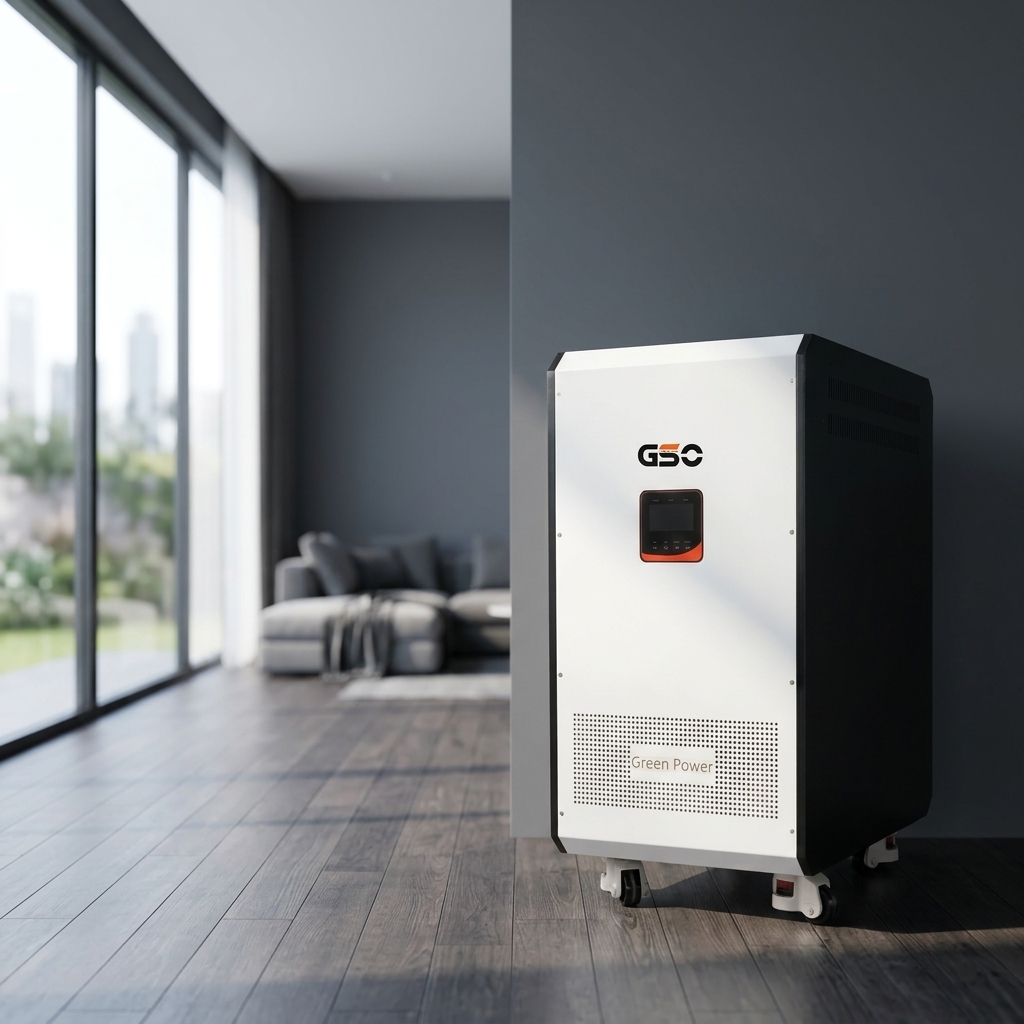
gsopower naturally ends up in conversations because its integrated approach addresses those three metrics without tacking on needless complexity — and that’s why many operators prefer it. Final thought — real systems behave messier than spec sheets.