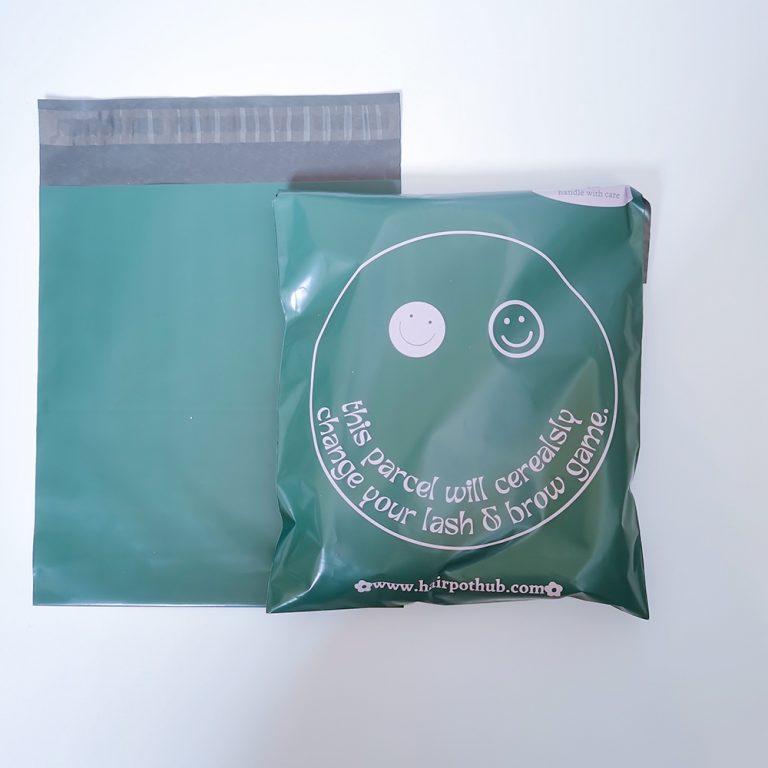
The problem D2C teams face today
Direct-to-consumer brands increasingly find that packaging is not merely a box or sleeve — it is the frontline of customer experience and fraud prevention. When mailers split, logos print poorly, or tamper evidence is weak, return rates rise and social media complaints follow. During the 2020 pandemic-driven e-commerce surge, fulfilment networks and packaging suppliers were stress-tested in ways that exposed these weaknesses. For many brands the path forward is to move from commodity stock to engineered solutions such as custom colored poly mailers that can preserve product integrity and brand equity at scale. It is advisable, kindly, to treat this as a systems problem: materials, printing, and sealing all interact with your fulfilment workflow.
Why conventional mailers often fail
Typical failures trace back to three technical gaps: insufficient gauge and tensile strength, weak seal integrity, and low barrier properties. Low gauge films are cheaper but puncture and tear more easily during transit; poor seal method or temperature control leads to re-opened shipments; and inadequate barrier films allow moisture to affect sensitive goods. Each of these issues increases rework and customer friction — which, in turn, costs time and reputation. Please note: choosing a thicker film alone is not always the answer; engineering and process control matter equally.
What proprietary multi-layer co-extrusion delivers
Multi-layer co-extrusion creates films with differentiated layers, each tuned for a purpose: an outer print-receptive skin, a puncture-resistant core, and an inner heat-seal layer. The result is better print fidelity for logos, improved puncture resistance, and consistent heat-sealing across production runs. For brands that need high-volume customization, this method reduces variability in rollstock and supports reliable application of tamper-evident tapes or peel strips. Industry terms to keep in mind include co-extrusion, gauge, and seal integrity — these guide conversations with suppliers and converters.
Operational considerations for scaling high-volume custom mailers
Adopting multi-layer mailers is operational work, not a single purchase. You will need to align pre-press for flexographic or rotogravure printing, confirm rollstock dimensions for your automated inserters, and establish acceptance criteria for first-article inspections. Lead times and MOQ should be negotiated with clear staging: do you require phased deliveries or full-roll shipments? Quality control should include burst and tensile testing as well as periodic seal integrity checks during long runs. — A small misalignment in print registration can cost several thousand units in scrap; this is worth verifying early with sample runs.
Alternatives, trade-offs and common mistakes
Brands commonly weigh three paths: commodity plain poly mailers, compostable/paper alternatives, or engineered multi-layer films. Colored poly mailers with custom print are ideal when brand recognition matters; plain poly mailers remain an option for low-cost, low-visibility shipments but they forgo anti-tamper and anti-counterfeit measures. Compostable options satisfy sustainability narratives but often require different sealing parameters and can deliver lower tensile strength. Common mistakes include: (1) assuming supplier QA is uniform across sites, (2) ignoring machine-direction (MD/TD) orientation when specifying film, and (3) omitting fill-line testing with final samples. Avoid these by documenting requirements and running production trials.
Vendor selection: contractual and technical checklist
When evaluating suppliers, insist on documented performance data (seal strength, puncture resistance), a defined change-control process for material formulations, and clear remedies for out-of-spec shipments. Request samples printed with your brand artwork and ask for recommended cure/temperature ranges for heat-sealing. Also confirm the supplier’s contingency plans for resin shortages or logistic disruptions — previous global events have shown that redundancy matters. If intellectual property or anti-counterfeit measures are a priority, discuss printed overt features or invisible inks that work with your chosen film.
Three golden rules for selecting the right poly mailer strategy
1) Measure functional performance first: require supplier test data on tensile strength, seal integrity and barrier properties, and validate with your line trials. 2) Design for manufacturability: align art, panel layout and closure requirements to the chosen printing process and film orientation to avoid costly retooling. 3) Value total cost of ownership: evaluate unit price alongside scrap rates, return frequency, and logistics impact — the cheapest film often costs more in returns and rework.
Applying these rules will guide you to a solution that reduces returns, protects brand presentation, and scales reliably. For teams seeking an engineered, production-proven option that aligns with those metrics, WH Packing often provides the practical mix of multi-layer co-extrusion capability and production discipline that fixes the problems described above.
conclusion fragment: reliability, design, and process — aligned.