
Data-driven framing: why chemistry matters
When operators ask whether to specify LFP, NMC or a flow option, they’re really asking which chemistry best aligns with an operational profile and commercial target. A clear, numerical appraisal is needed — not guesswork — particularly for intensive commercial & industrial (C&I) sites and for systems that smooth variable generation from PV. This discussion starts from measured performance metrics for solar battery storage deployments, then contrasts expected lifecycle and system outcomes by chemistry.

Defining the two use-cases
There are two distinct operational logics to compare. Intensive C&I cycling demands frequent charge–discharge activity to shave peak demand, provide demand charge reduction and support fast frequency response. Renewable smoothing focuses on absorbing short-term PV variability and shifting energy across hours to firm output for self-consumption or grid export. Each use-case imposes different stresses on cycle life, C-rate capability and depth of discharge (DoD), so the optimal chemistry will differ.
Overview of chemistries and core characteristics
Lithium Iron Phosphate (LFP): strong cycle life, good thermal stability, moderate energy density, excellent calendar life. NMC (Nickel Manganese Cobalt): higher energy density and power for a given footprint, but typically shorter cycle life and greater thermal management needs. Flow batteries (vanadium redox, for example): near-infinite cycle life for many shallow cycles, decoupled power and energy sizing, but larger footprint and higher balance-of-plant complexity. Solid-state and sodium-ion systems are emerging, yet commercial traction for heavy C&I is still nascent.
Performance metrics that drive choice
Focus on measurable metrics: cycle life at target DoD, round-trip efficiency, usable capacity (accounting for recommended DoD), C-rate capability and safety profile (thermal runaway risk). For example, an LFP pack might deliver >6,000 cycles at 80% DoD; an NMC pack may offer higher energy density but often closer to 2,000–3,000 cycles under similar stress. Round-trip efficiency differences of a few percentage points compound over years — so do not ignore them in levelised cost calculations.
Trade-offs for intensive C&I cycling
For sites with high daily cycling and frequent deep discharges, cycle life and thermal robustness dominate the economics. LFP generally leads here: lower degradation per cycle, strong safety margins, and predictable capacity fade make it attractive for demand-charge management. NMC may be selected where site constraints favour smaller footprint or when high power density is crucial, but it typically requires more conservative DoD settings and tighter BMS controls. Flow systems can work brilliantly where very long cycle life and frequent shallow cycling are required — albeit at higher upfront capital and physical space.
Trade-offs for renewable smoothing
Renewable smoothing often involves many shallow cycles and a need for high efficiency to reduce curtailment losses. NMC works where compact energy density eases integration with rooftop or constrained plant layouts; LFP excels where smoothing requires sustained cycling over years with minimal degradation. Flow batteries are compelling for multi-hour smoothing and daily energy shifting because their usable energy does not degrade as sharply with cycles — but remember that balance-of-system (pumps, tanks, power electronics) adds complexity and operational maintenance.
System-level considerations beyond chemistry
Choice of chemistry cannot be decoupled from battery management system (BMS) sophistication, thermal management, warranty terms and operational strategies. A high-quality BMS that enforces appropriate SoC windows will dramatically extend realised cycle life — and thus alter the cost comparison. Warranty structure (guaranteed cycles vs residual capacity) and replacement costs must be modelled into the project IRR. Also consider interoperability with inverters and controls for grid services such as frequency regulation and ramp-rate control.
Real-world anchor: lessons from grid-scale deployments
Practical evidence helps. The Hornsdale Power Reserve in South Australia demonstrated rapid response benefits for grid stability and ancillary revenues; projects like it highlight the value of high-power, fast-response chemistries paired with robust controls. Likewise, California ISO’s “duck curve” episodes show why solar smoothing and storage dispatch must be driven by hourly and sub-hourly data. These cases underscore that the best chemistry is the one that achieves your dispatch profile reliably under local grid conditions.
Common mistakes and how to avoid them
Owners and designers often misjudge three things: the real usable capacity after conservative DoD settings, the non-linear costs of thermal controls, and warranty exclusions tied to cycling regimes. They assume nameplate kWh equals usable kWh — and then wonder why capacity fades faster than expected. Also, the temptation to optimise solely on upfront CAPEX ignores lifecycle replacement costs and degradation. — Always validate performance assumptions with field trials or manufacturer cycle data that match your expected duty cycle.
Comparative checklist for procurement
When tendering, require: (1) cycle life curves at the planned DoD and temperature range; (2) defined round-trip efficiency under operational C-rate; (3) BMS features and fault-handling logic; (4) warranty terms tied to both calendar and cycle degradation; (5) documented safety testing and certifications. Use these data points to build a total-cost-of-ownership model rather than make decisions on capital cost alone. For many roof-mounted PV-plus-storage projects, pairing a high-efficiency inverter and an appropriately sized LFP pack for smoothing yields excellent operational predictability, and that is where solar power energy storage systems often fit neatly.
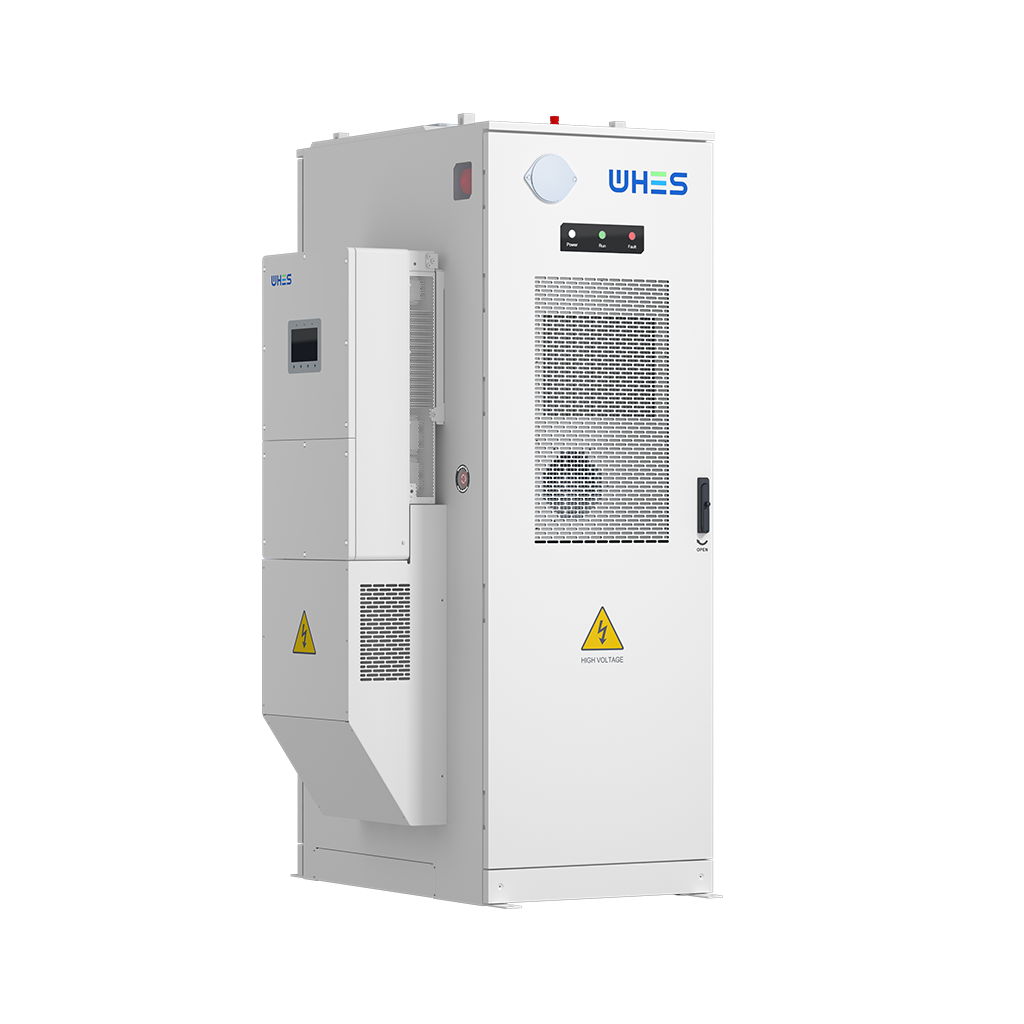
Three golden rules for selecting chemistry and system design
1) Match chemistry to duty cycle: prioritise LFP for frequent deep cycling and thermal stability; consider NMC when space or weight is the constraint; choose flow for long-duration, high-cycle shallow workloads. 2) Insist on real-world performance data: require cycle-life curves at your operating DoD and ambient conditions; simulate dispatch with conservative SoC limits. 3) Evaluate total lifecycle cost: include replacement, balance-of-plant, thermal management and warranty-exit scenarios rather than comparing only $/kWh upfront.
Choosing correctly reduces operational surprises and optimises returns over project life — and for pragmatic, scalable solutions across both heavy C&I cycling and PV smoothing, working with an experienced system integrator makes the difference. WHES. –