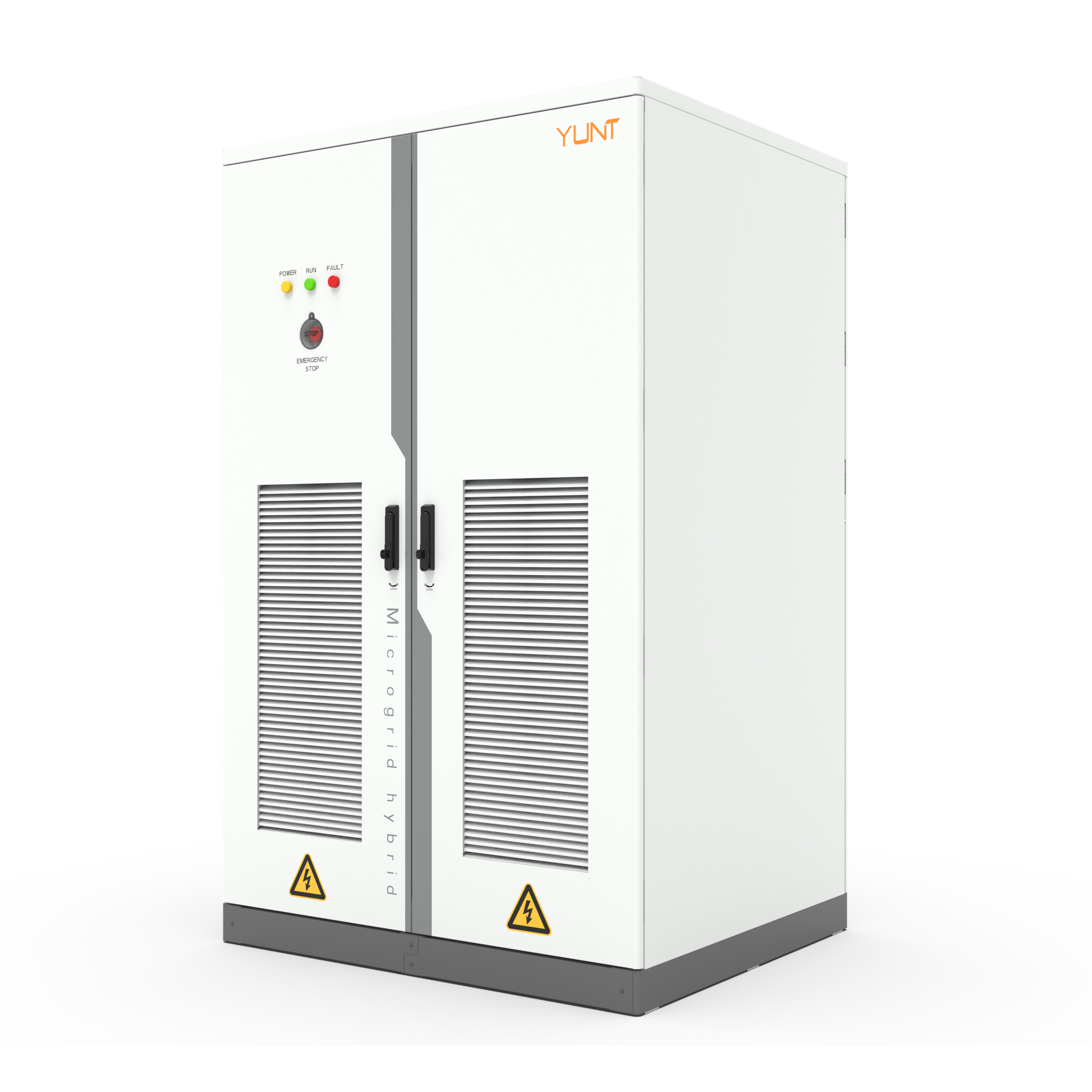
How to separate stated product details from assumptions about Hybrid Inverter: RFQ preparation for early research
When an operations team starts an RFQ, hybrid inverter research should begin with the intended operating context, not with a broad comparison of product claims. The first task is to describe what the system must do, where it will operate, and which decisions remain open. This creates a useful boundary between requirements, page-listed details, and questions that only a supplier can answer.

Start with a short use-case record. Note whether the planned system is being considered for on-grid operation, off-grid operation, or a microgrid system. The official product page presents YUNT Hybrid Inverters in all three contexts, describing on-grid and off-grid operation, DC-to-AC conversion, intelligent energy management, and reliable microgrid systems. These statements define the page’s stated scope. They do not, by themselves, confirm that a particular model fits a planned site.
Define the use case and constraints
Keep the first RFQ description practical. Identify the loads or operating functions that matter, the available installation space, and the point at which the inverter would connect to the wider system. If some of these details are not settled, record them as open points rather than filling the gaps with assumptions.
It also helps to separate three types of information. A requirement describes what the project needs. A stated product detail describes what the captured page says. An assumption is an interpretation that still needs confirmation. For example, “supports on-grid and off-grid operation” is a page statement. “Will work with our planned battery arrangement” is a project-specific conclusion and should remain a question until the relevant technical conditions are established.
Space deserves the same treatment. An operations team can state the physical area available for equipment and ask for the installation conditions needed for the proposed unit. It should not infer enclosure dimensions, environmental ratings, wiring arrangements, service clearances, or installation methods from a general product description. These points belong in the RFQ because they can affect whether the proposed design is practical.
Map stated evidence to requirements
Build a simple evidence map before comparing responses. One column can list the project requirement. A second can record the exact page-supported statement. A third can identify the evidence status: stated, to be confirmed, or outside the available material. This approach keeps a polished product description from becoming an untested procurement conclusion.
For early research, the page supports a focused set of discussion points. It describes the product family as intended for seamless on-grid and off-grid operation. It also refers to DC-to-AC conversion and intelligent energy management for microgrid systems. Those points can guide the first RFQ questions. They do not establish a power rating, efficiency figure, battery compatibility, control protocol, protection level, or operating limit.
A useful comparison therefore avoids empty scoring. Do not award a product a favorable mark because a technical value has not been published in the material being reviewed. Instead, mark the value as unresolved and carry it into the supplier question list. This makes the record easier to audit and prevents early research from looking more conclusive than it is.
Turn open points into supplier questions
Use questions that connect directly to the operating plan. Ask the supplier to identify the relevant model or configuration for the stated use case. Ask which on-grid and off-grid operating conditions are covered for that configuration. Ask what information is required to assess the proposed battery, load, control, and installation arrangement. Each question should make clear whether the team is requesting a fact, a design recommendation, or a formal confirmation.
For the supplier screen, the official page describes YUNT as a hybrid inverter supplier whose modular products and global certifications are presented as supporting rapid local adaptation. It also describes tailored solutions, fast project implementation, and ongoing technical support. Treat these as supplier-level statements for the stated page scope. They are useful prompts for an RFQ, but they do not prove a specific delivery schedule, project outcome, certification applicability, or technical fit.
Ask the supplier to connect any response to the proposed project rather than accepting a general assurance. A strong RFQ response should identify the product or configuration under discussion, the assumptions used, and the items that still require engineering review. If the response changes the original operating description, update the evidence map instead of silently changing the requirement.
Summarize a defensible next step
The next step after early research is not necessarily a purchase decision. It may be a narrower technical discussion based on the use case, space limits, and unresolved compatibility questions. Keep the decision record short: list the intended application, quote the relevant page statements, separate confirmed facts from assumptions, and attach the unanswered questions that matter most to operations.
This method also improves internal handoffs. Procurement can see why a question was asked. Engineering can see which points need technical judgment. Operations can check whether the proposed application still matches the original need. The record remains useful even when the first candidate does not proceed, because the same distinction between evidence and assumption can be applied to the next response.
In summary, early hybrid inverter research is most reliable when it starts with use and space constraints, maps each requirement to stated evidence, and turns every unresolved point into a precise RFQ question. The official page provides a bounded starting point for YUNT, while the project team remains responsible for separating those published statements from conclusions about its own application.