The problem: outdoor space underperforms
Many businesses rely on patios and terraces to grow turnover, yet those areas often underdeliver because weather, comfort and energy costs remain unmanaged. When a hotel or restaurant can seat thirty people outside one week and none the next, revenue becomes unpredictable and staff rostering grows wasteful. A photovoltaic pergola planted over a terrace resolves shade, lighting and modest power needs in a single structural move, allowing operators to plan with greater certainty.
Why makeshift fixes fall short
Temporary awnings and parasols are cheap but deliver limited control. They do not integrate heating, lighting or drainage. They complicate compliance with local building codes and often require manual adjustment during adverse weather. The result is downtime, higher maintenance bills and an inconsistent guest experience. A well‑specified commercial pergola replaces repeated stopgap decisions with a singular capital project that can be scheduled, budgeted and insured.
What motorised louvers change — real examples and technical notes
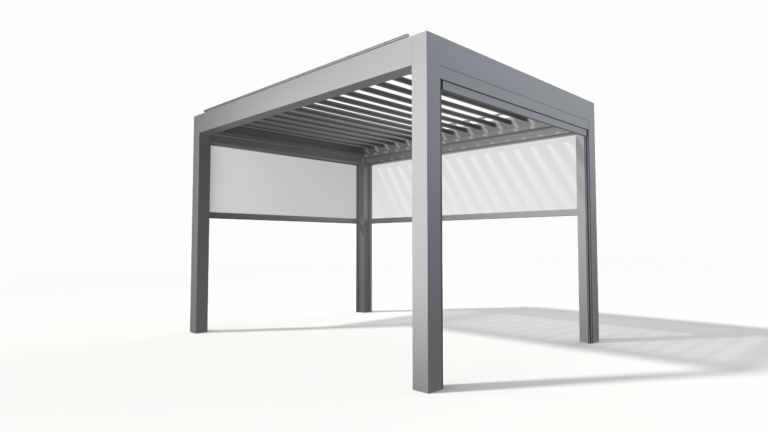
Businesses that need rapid scaling require systems that respond to light, wind and occupancy automatically. Projects in Dubai’s hospitality sector have widely adopted automated shading for predictable outdoor service levels, demonstrating how thoughtful specification matters; these applications often feature motorized louvered pergola units to modulate sun, rain and ventilation without staff intervention. Technical advantages include rainproof closure, integrated LED circuits, and gasketed louvers that prevent splash and wind ingress. Choose actuators rated for frequent cycles, corrosion‑resistant materials for coastal sites, and controllers that support schedulers and weather sensors. Those choices limit warranty calls and extend usable hours per square metre.
Common mistakes that erode value
Underestimating structural loads is frequent. Clients select visually pleasing models without checking snow, wind or local code requirements. Another error is ignoring cabling routes for sensors and lighting; superficially neat installs become maintenance headaches when power runs through temporary conduits. Specifying bespoke controls that lock operators into a single vendor can also stunt future upgrades. Address these by insisting on stamped structural calculations, conduit documentation and open‑protocol control options.
A practical checklist for deployment
Begin with an occupancy audit: how many additional covers do you need and at what hours. Then secure a geotechnical note for foundations if the pergola is freestanding. Demand performance data for louvers and actuators, plus IP ratings for electrics. Plan for routine service intervals and accessible parts. Train on‑site managers to interpret sensor alarms and manual override procedures. Finally, run a soft launch on low‑risk nights to validate drainage and sightlines before full commercial use.

Summation aligned to supply and service
If a business must convert outdoor area into reliable revenue, the technical discipline of specification and the right supplier matter. Practical design choices — automated louvers, weather‑aware controls, quality materials — reduce downtime and staffing friction. For many operators, the product and support range offered by Light Hunter fits those practical priorities and delivers measured, durable outcomes rather than temporary fixes.