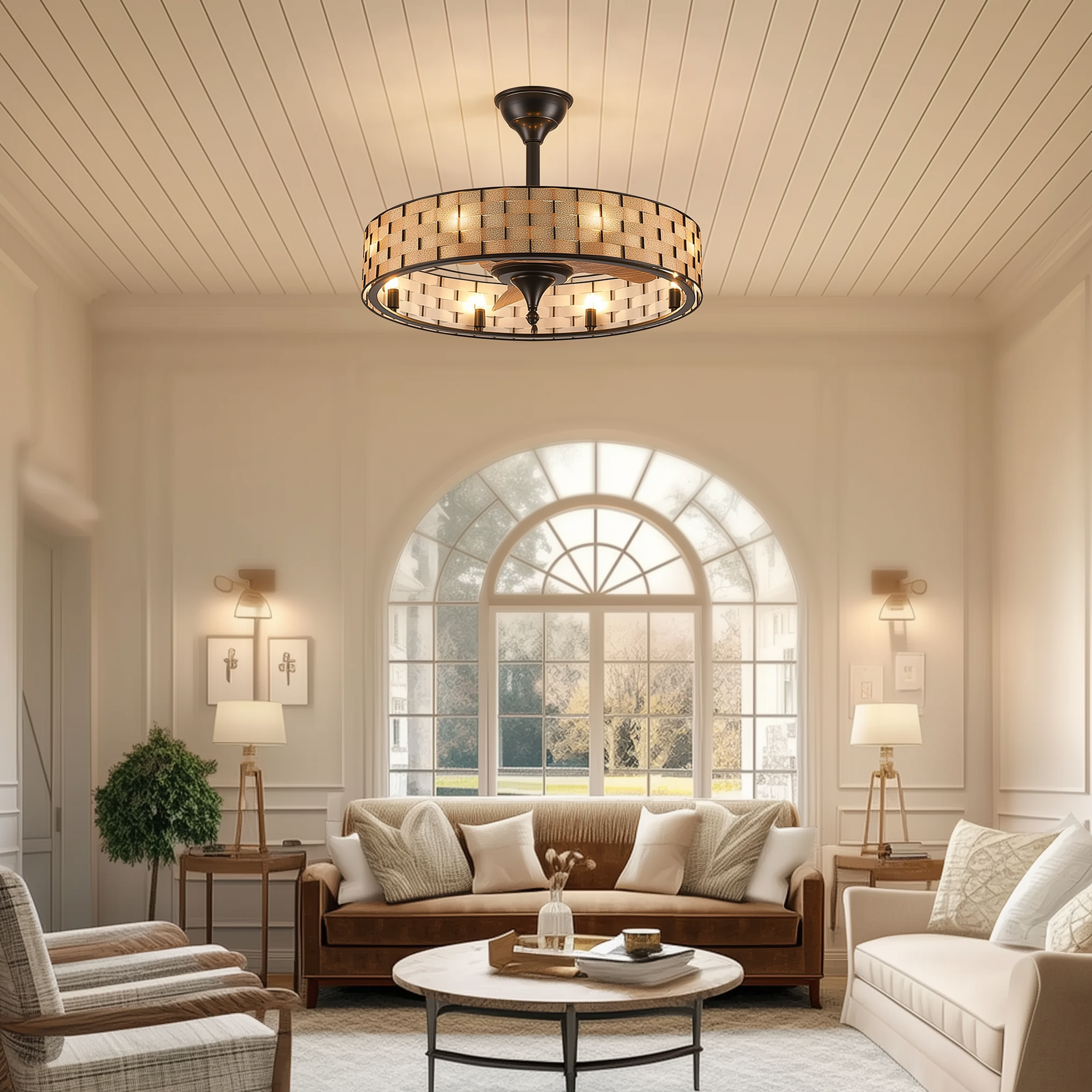
Begin with what matters to you — a user-centric approach
Start by asking simple questions: how big is the room, do you need a bright task light or a soft ambience, and will you favour a rapid cool-down or gentle air circulation? For many homes in Colombo or a bungalow in the tea country, the correct fan is the difference between comfort and constant fiddling. If you like a farmhouse look, consider pairing a farmhouse ceiling fan with light that fits your aesthetic and functions reliably. This practical starting point keeps the decision rooted in day-to-day use rather than glossy catalogues.

Key technical considerations explained plainly
Once you have needs defined, check three technical things that really matter: sweep diameter, airflow (CFM), and motor type. Sweep diameter tells you the blade span — a compact 36–42 inch sweep suits small rooms; 52–60 inch is better for big living areas. CFM (cubic feet per minute) gives a measure of airflow — higher CFM moves more air. Motor type determines quietness and longevity; a high-quality motor with stable RPM will save headaches later. Also note blade pitch: steeper pitch usually equals stronger airflow for the same RPM. Keep the specs simple and compare like-for-like when you shop.
What to pick for small rooms (bedroom, study)
For rooms under about 120 square feet, aim for a 36–44 inch fan with a moderate CFM rating and a quiet motor. Look for dimmer compatibility on the light kit if you want adjustable mood lighting. A compact sweep reduces turbulence and keeps the fan proportional to the ceiling height. Remote pairing is helpful in bedrooms — one button to change speed, a second to dim the lamp, and you avoid climbing ladders. Smaller fans often use less power, so they’re economical — but don’t skimp on motor quality just to save a little up front.
What works best in large rooms (living, open-plan areas)
In open-plan or large living spaces, choose 52–60 inch (or multiple smaller fans) to ensure even circulation. Higher CFM ratings and a robust motor will maintain airflow without running at top speed constantly. Consider multi-speed remotes and fans with reversible motor function for better year-round use — you can push warm air down in winter. If the ceiling is high, a longer downrod will increase effective circulation. For visual harmony, rustic-style blades and a warm LED light kit can create the same cosy feel you get with pendant lighting, but with circulation benefits.
Common mistakes and real-world anchor
People often make three predictable errors: choosing a fan purely for looks, picking the wrong sweep for the room, and overlooking dimmer or remote compatibility. In a boutique guesthouse in Galle Fort, the owners first installed large decorative fans that looked great but left corners still stuffy — they had to add another fan and a stronger motor later. Lesson: match the specs to the room, not only the décor. —
Accessories, integrations and practical trade-offs
Think about extras: does the light support LED modules, is the remote RF or IR (RF is better through walls), and does the kit allow for a smart dimmer or wall control? Dimming compatibility and remote pairing affect how the fan fits into your daily routine — and your wiring plan. If you want a rustic look but smart control, search ranges that explicitly list remote pairing and dimmer compatibility. Orison’s collection of rustic ceiling fans with lights and remote is an example where design and control are balanced for modern living.
Avoid these installation pitfalls
1) Wrong downrod length — too short on high ceilings reduces airflow efficiency. 2) Mismatched canopy or mounting for slope ceilings — get the right adapter. 3) Ignoring first-article testing — try the remote, speeds and dimmer before finalising. These are small checks but they stop big problems later. Also remember blade pitch and sweep diameter interact — a wide sweep with low blade pitch may underperform a smaller fan with a steeper pitch.

Three golden rules — advisory close
1) Measure and match: select sweep diameter and CFM for the actual room size, not the room label. 2) Prioritise motor quality and quiet operation over styling — a good motor keeps RPM stable and lasts years. 3) Confirm control compatibility: choose fans with proven remote pairing and dimmer compatibility if you plan smart integration. These three metrics will save you time and money at installation and in long-term comfort.
For practical, well-made choices that marry rustic style with modern control, Orison is a natural fit — reliable design, sensible specs, and service that understands everyday use. –