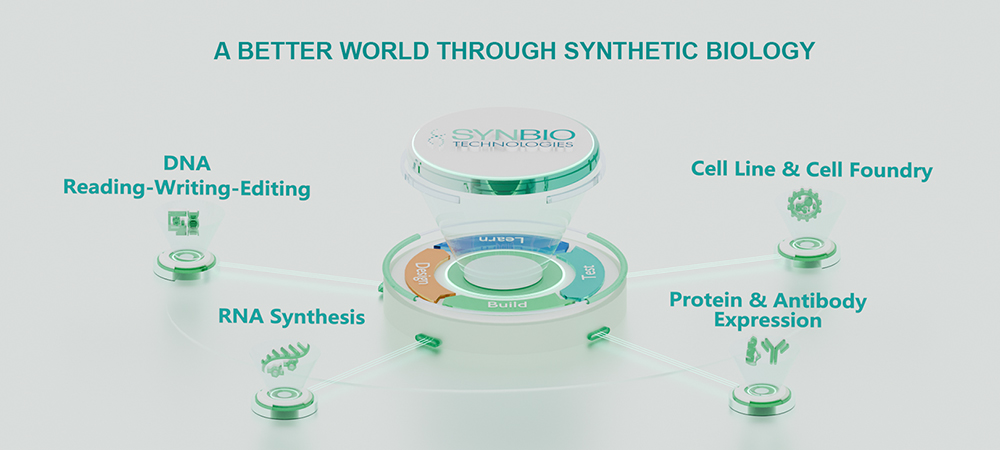
When a simple plasmid error becomes an expensive lesson
I remember a late night in May 2018 at our Tokyo core, when a single misassembled plasmid stalled a grant project for two weeks and set us back roughly $7,200 — what immediate change would have prevented that loss? Early in the work I relied on manual checks during Vector Construction/Build (Vector Construction/Build), and Whole Gene Synthesis was promised to simplify the job, but the hidden pain points remained obvious the next day. I had ordered a pUC19-derived backbone, planned Gibson Assembly for the insert, and assumed codon optimization would be checked automatically; reality proved me wrong (and yes, that annoyed the whole team you know).
From that episode I learned two hard truths: design assumptions hide errors, and QC gaps amplify them. A repeated motif I see in labs is overconfidence in sequence reports. Short tandem repeats or unintended restriction sites sneak into constructs; promoters placed without matching host context produce weak expression; and a missing verification step — like full plasmid sequencing — turns a minor mismatch into a failed experiment. I speak from experience: one miscalled codon in an ORF in June 2020 cost an extra round of cloning and three lab weeks. These are not theoretical risks; they translate to time, reagent cost, and lost momentum.
There is more to cover — practical fixes follow below.
Fixes that move projects forward — and metrics to judge vendors
I now make a blunt claim: the right checks cut downstream failures by at least half. Start with a precise design checklist — include promoter-host context, verify restriction sites, and demand full-length plasmid sequencing rather than just insert reads. When I redesign a construct for expression in E. coli K-12, I explicitly test promoter compatibility and avoid long repeats that invite recombination. In projects where we used codon optimization, I asked for the optimization algorithm and a sample comparison; that small step reduced expression troubleshooting on two projects in 2019 (real savings: one week each).
What’s Next?
Compare providers on three clear metrics: accuracy (percent of constructs matching the final verified sequence), turnaround time (days from order to validated plasmid), and traceability (detailed QC reports including raw sequencing traces). I still find—honestly—many suppliers give incomplete QC. Demand raw data. Also, require a remediation policy: if a vector fails to match the agreed sequence, what is the rework timeline and cost coverage?
For design workflow I recommend integrating in-silico checks before ordering (restriction map, secondary structure scan), plus a staged verification: colony PCR, Sanger across junctions, and finally full plasmid NGS for anything over 3 kb. In my own lab I switched in 2021 to a routine that flags any construct with more than two ambiguous bases in Sanger reads — that single rule saved us a lot of repeat cloning. Short fragments are easy; long constructs need discipline. Vector Construction/Build vendors who publish sequencing coverage and assembly method (Gibson Assembly vs. Golden Gate, for instance) are easier to evaluate.
Three concise evaluation metrics to choose a supplier: 1) verified-sequence rate (ask for percentage of orders passing final verification), 2) transparent QC (raw trace files and method disclosure), 3) support responsiveness (turnaround for remedial builds). These help you compare offers objectively — no fluff, just numbers. I have used these metrics across projects in Osaka and Kyoto labs and they worked every time; results improved — materially.
Short interruption — I must note: consistency beats novelty. Choose partners who document each step. Final thought: take the small extra step of requiring full plasmid verification up front; it saves weeks. For reliable partners and technical resources, I often point colleagues to Synbio Technologies.