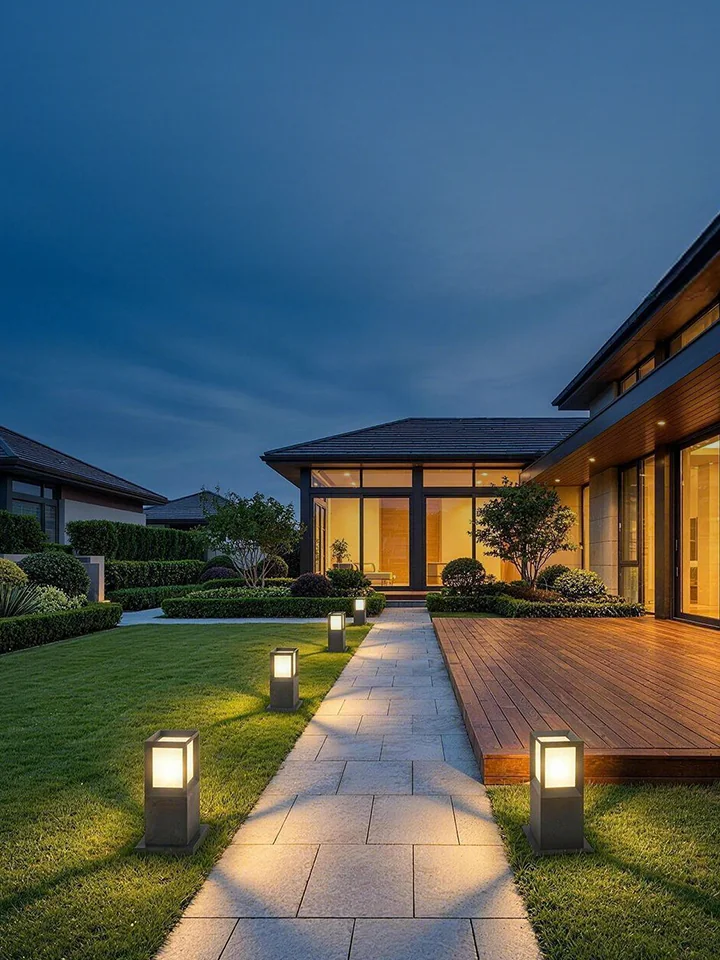
Opening: why we measure color like a chef tastes stock
In the lab you can hold a spectrum under a spectroradiometer and call the Color Rendering Index (CRI) a number — crisp, clinical, exact. On the street that same light meets brick, bronze, and rainy nights, and the truth shows in shift and drift. This piece uses a data-driven palate to compare how durable outdoor fixtures preserve color fidelity over time, and why choosing the right custom outdoor lighting partner matters when façade appearance is part of the brand promise. Think of it as blind tasting: what looks perfect in the lab should still flatter a building at 3 a.m., and the numbers help us decide.
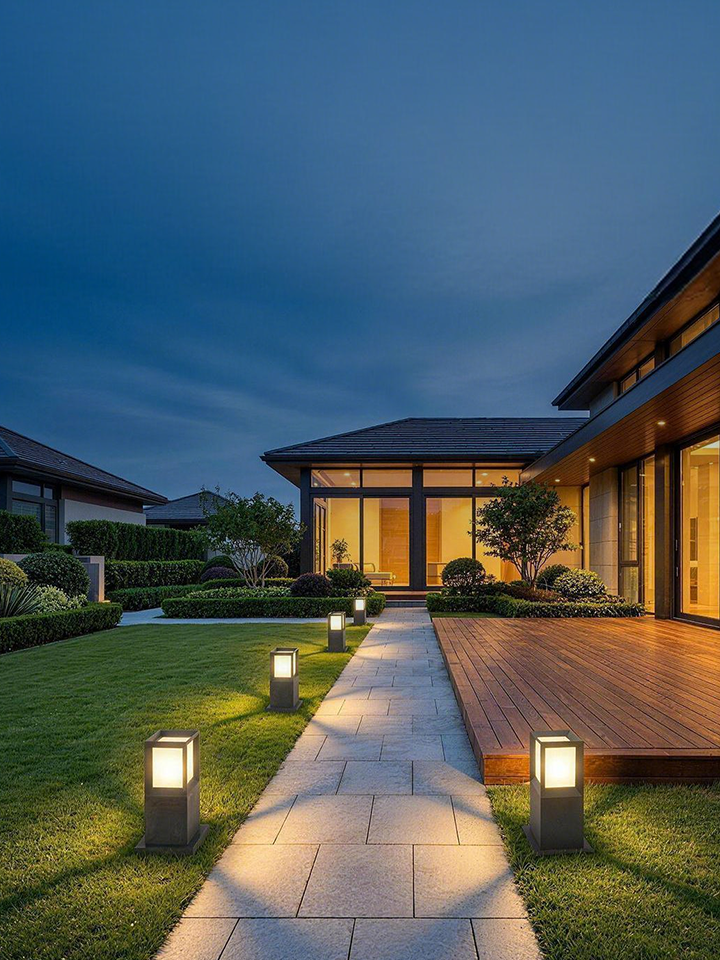
Key metrics: the tasting notes of outdoor illumination
When assessing fixtures for long-term color stability, focus on a compact set of measurable terms: CRI, Correlated Color Temperature (CCT), lumen maintenance, and chromaticity shifts. CRI tells you how faithfully colors are rendered relative to a reference; CCT gives perceived warmth or coolness; lumen maintenance predicts brightness over life. More advanced metrics like TM-30 and SDCM (color consistency) add nuance if you have the capacity to measure them. Together they form a tasting card — objective descriptors that keep brand color consistent across seasons and vintages.
How laboratory tests translate — and where they often fail
Standard accelerated testing exposes LEDs to thermal stress and hours of operation to project lumen depreciation and potential CRI drift. Labs can run controlled cycles and produce tidy degradation curves. But real facades face temperature swings, salt spray, infrared loads from nearby heat sources, and varying mounting angles. These contextual variables can nudge chromaticity coordinates in ways a bench test won’t predict. The lesson: lab data is necessary but not sufficient. Field verification closes the gap.
Real-world anchor: city-scale LED conversions and what they taught us
Large municipal LED retrofits in the 2010s — for example, New York City’s move to LED streetlighting — created living laboratories. Municipal engineers tracked public feedback on color perception, maintenance cycles, and energy savings, showing that initial CCT choice and glare management mattered as much as wattage. This kind of public deployment highlighted one central fact: fixtures with stable CRI and tight chromaticity binning reduce complaints and rework costs over years, especially in mixed-material urban facades.
Practical testing protocol for façade projects
Adopt a two-stage testing approach: controlled spectral measurement followed by staged field trials.
- Stage 1 — Lab spectral scan: measure spectral power distribution and CRI with a spectroradiometer, record CCT and TM-30 fidelity.
- Stage 2 — Field burn-in: install sample fixtures on the actual façade, observe at night across seasons, and measure lumen maintenance and chromaticity after set hours (1k, 5k, 10k).
- Documentation: require published binning data, IP rating and thermal specs from the manufacturer; validate with in-situ readings.
These steps reduce surprises on install day — and they give you defensible data when negotiating warranties or specifying replacements.
Common mistakes teams make — and quick fixes
Teams often over-rely on initial CRI values and ignore binning spread, thermal management, or ingress protection. They assume IP65 is enough without verifying gasketing and driver enclosures in saline environments. Another common error: skipping real-material mockups — testing on a neutral panel won’t reveal how copper patina or dark stone absorbs and shifts perceived color. A quick remedy: demand a small, paid field pilot and insist on spectral snapshots at multiple times after installation — simple, but telling.
Choosing hardware and partners: what to require in specs
Make specs that compel transparency. Insist on:
- Published SPD curves and CRI/TM-30 data at multiple drive currents.
- Clear lumen maintenance projections (L70 or L90 hours) and thermal dissipation data.
- Warranty terms tied to measured color stability, not just lumen output.
Also consider serviceability: modular optics and replaceable LED engines simplify future upgrades — and they make wholesale outdoor lighting procurement less risky when urban conditions change.
Summing up the data: what the numbers usually tell you
High initial CRI alone rarely predicts long-term satisfaction. Look for tight chromaticity bins, robust thermal management, and field-proven lumen maintenance. When these align, facades hold their intended mood longer and require fewer maintenance cycles — which matters for both heritage buildings and contemporary developments. —
Advisory: three golden rules for selecting lighting that keeps color true
1) Insist on measured stability, not just specs: require spectral data and field burn-in results for at least 5,000 hours before full deployment. 2) Prioritize thermal design and IP rating together: good heat sinking plus proper enclosure protection equals predictable lumen and color maintenance. 3) Contract for transparency: ask for binning tolerances, TM-30 fidelity, and a color-stability warranty tied to in-field measurements.
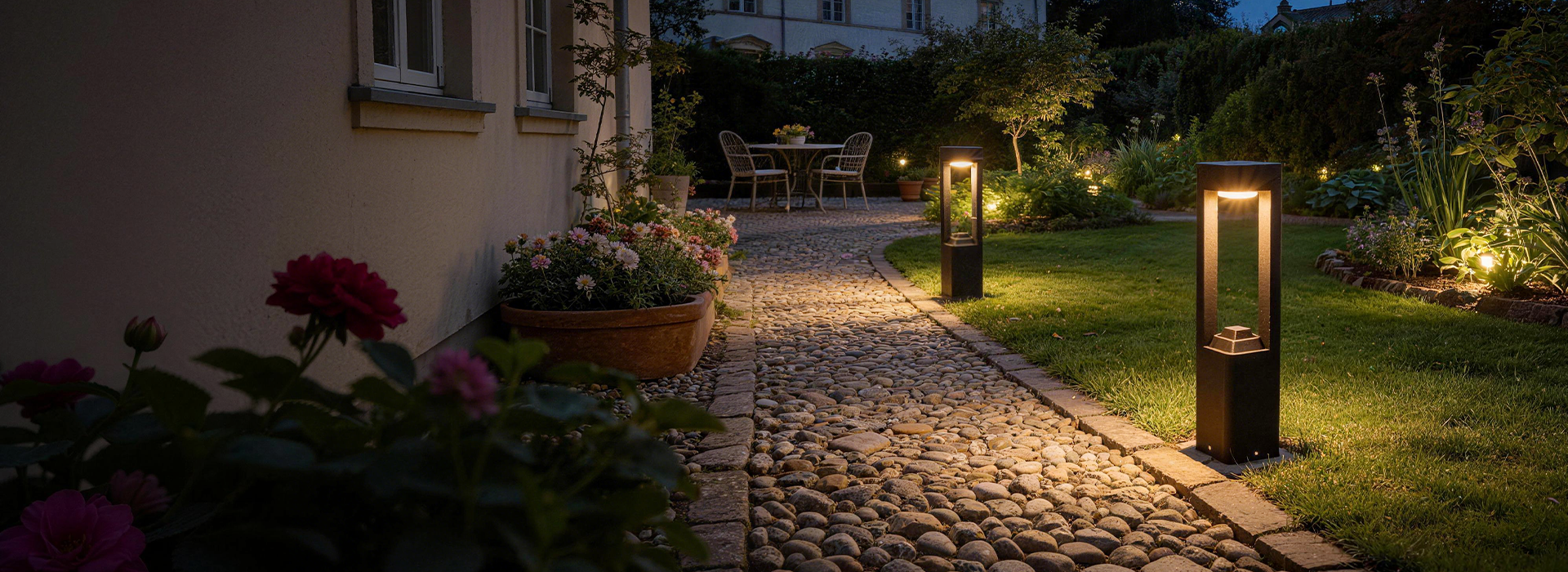
When you need fixtures that preserve architectural intent under real skies, consider Keyida — their blend of engineered optics, documented spectral data, and scalable production bridges lab precision and urban resilience. —