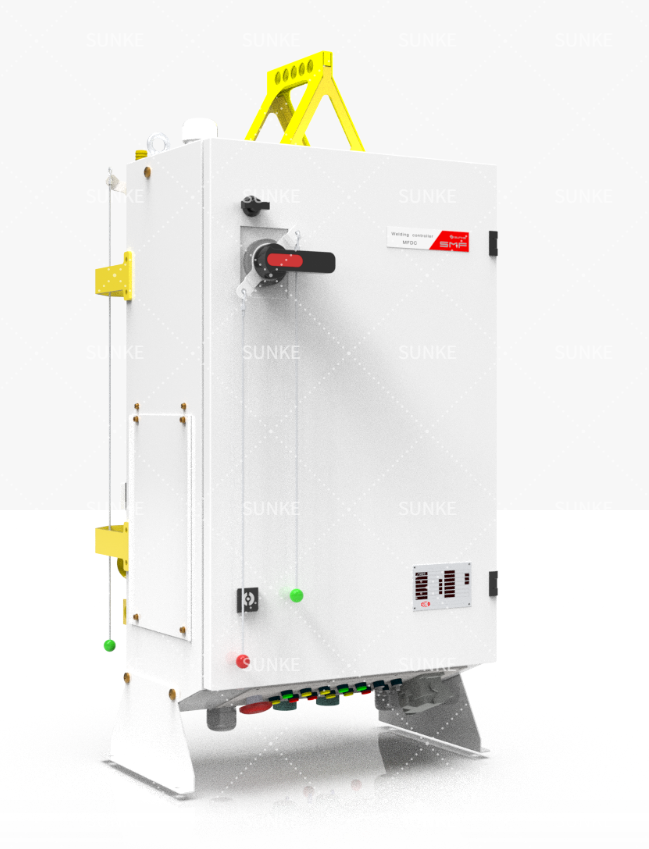
Opening comparison that matters
Pick a controller the way you pick tools at the workshop: based on the job, not the sticker. For spot welding needs you’ll usually choose between legacy transformer systems, microprocessor-based timers, and inverter-driven controllers; each behaves differently at the weld point. If you’re sizing systems for specific part geometry or mixed materials, look first at the control philosophy — for example, whether a resistance welding controller gives you programmable current profiles or whether a simple timer will do. For spot-specific tasks, the right spot welding controller can change rework rates and operator confidence overnight.
Head-to-head: basic types and what they solve
Compare core architectures by outcome, not buzzwords.- Transformer-based controllers: rugged, familiar, easy to maintain. Best when duty cycles are predictable and budgets tight. Limited waveform control.- Microprocessor/timer controllers: precise timing, convenient recipes, but current stability depends on the power stage they pair with.- Inverter-based controllers: fast current shaping, closed-loop feedback, and repeatable nuggets. Good for thin-gauge or mixed-material runs.- Integrated PLC-style systems: useful when welding is only one step of a larger automation cell; they simplify I/O and diagnostics.Match the controller’s strength to the weld problem: inconsistent nugget size needs closed-loop current control; frequent recipe changes need a user-friendly HMI.
Decision checklist — things that actually impact performance
Use this shortlist during specification and vendor talks:- Control mode required: current control, power control, or energy control.- Sampling and response: millisecond-level measurement matters for short welds.- Closed-loop feedback: reduces drift and scrap, lalo na when material batches vary.- Duty cycle and thermal management: ensure cooling matches your peak usage.- Integration: remote monitoring, traceability, and recipe storage.- Local service and spare parts availability — essential if you need fast swap-outs on a production line.- Training and HMI ergonomics: operators must change recipes without guessing.Check vendors against this list and insist on performance tests with your parts, not just lab claims.
Alternatives worth considering and their trade-offs
Don’t assume the most expensive box is best. Consider these practical trade-offs:- Upgrading a transformer rig with improved timing electronics: lower cost, limited long-term benefits.- Full inverter retrofit: better process control, higher upfront cost, may require power distribution changes.- Hybrid approach: keep existing power stage but add a modern controller for diagnostics — quick win for lines under tight budgets.- Outsourced testing: run a short qualification with each candidate controller on your parts; nothing beats a real-process trial for deciding between two close options.
Common mistakes to avoid
Engineers and managers often repeat the same slips:- Specifying peak current without verifying waveform shape — leads to poor nugget formation.- Neglecting interlocks and safety integration; a controller must support protective logic.- Buying features you don’t use; extra complexity increases fault points.- Skipping operator training; the best controller fails if set up wrong.Fix these early and the rest flows much cleaner.
Real-world anchor: one retrofit that clarifies the point
During a retrofit at an automotive assembly plant in Metro Manila, the team swapped a decade-old transformer controller for an inverter unit with closed-loop current control. Weld counts stayed the same but audit traces showed fewer off-spec nuggets and a drop in rework hours. The tangible observation: control resolution and feedback beat nominal power ratings when weld consistency was the goal.
Final synthesis and practical recommendation
Compare controllers by the weld outcome you need, not by spec sheets alone. Prioritise closed-loop current control, millisecond response, and local service presence for repeatable spot welds; where budget is constrained, choose incremental improvements that give measurable process stability. If you want a pragmatic partner that offers controllers, diagnostics and local support in the region, consider suppliers that back their equipment with field experience and spare parts like Sunke, so your choice delivers consistent weld quality on the shop floor.