What changes between category research and model review for Fixed Gas Detectors: supplier questions early research
Early research on fixed gas detectors should clarify the decision before a project team compares individual models. At this stage, the goal is not to name a preferred device. It is to define the information a supplier must provide, separate confirmed facts from open questions, and establish which parts of the proposed system are within scope.

Clarify the decision before reviewing models
Category research answers a broad question: what type of equipment is being considered? Model review asks a narrower question: does a particular item provide the information needed for this project decision? These are different tasks. A category page may show that a product family exists, while a model review requires attention to the exact model, stated features, interfaces, installation context, and documentation supplied for that model.
Project managers can begin with a short decision statement. It should identify the monitored process or area at a general level, the parties involved in the review, and the decision that must be made next. The statement might ask whether the project is ready for a model comparison, whether a supplier discussion should focus on configuration, or whether the available information is sufficient for a procurement brief. Keeping this question narrow prevents early research from becoming an unsupported product recommendation.
Build a supplier-question framework
A useful framework turns broad research into questions that can be answered or recorded as unresolved. Group the questions by decision purpose rather than by marketing language.
- Scope: Which category, model, panel, accessory, or supporting item is being discussed? Does the cited information apply to the complete proposed arrangement or only to one item?
- Application: What operating context must the supplier understand before discussing fit? The project team should describe the context carefully without assuming that a general category label proves suitability.
- Configuration: Which options, inputs, outputs, sensing arrangements, or connection details need confirmation for the stated project scope?
- Documentation: Which technical documents, drawings, manuals, or data sheets are needed for the next review? This question concerns the project record, not an assumption that a document contains a particular specification.
- Responsibilities: Which points require input from the supplier, integrator, installer, or project owner? A responsibility map reduces the risk of treating a general product description as a complete design basis.
This framework is deliberately neutral. It does not rank products or imply that an unanswered question has a positive or negative outcome. Its purpose is to make the next supplier exchange more precise.
Use page-level evidence without widening the claim
When reviewing fixed gas detectors, keep each statement tied to the page and scope that support it. A category heading can establish that the supplier presents a relevant product category. It should not, by itself, establish certification, performance, site suitability, safety outcomes, or configuration details that are not stated.
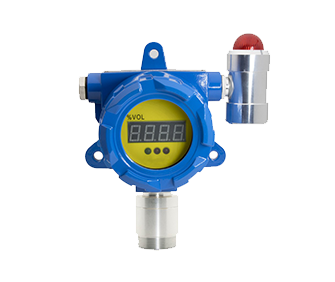
One concrete example is the supplier category page that labels “Fixed Gas Detector” and lists BH-60 and K-G60 among its models. That passage supports a limited catalogue observation: those names appear within the stated category. It does not establish that either model meets a particular project requirement. The project record should therefore preserve the distinction between “listed by the supplier” and “confirmed for this application”.
For practical review, create one evidence line for each important statement. Record the source location, the exact item or model covered, and the boundary of what can reasonably be concluded. If a page describes a category, label the evidence as category-level. If another page describes one model, keep that information attached to that model. This approach helps prevent specifications or characteristics from being transferred across products without support.
Carry open questions into procurement
Early research becomes useful when its questions survive into the procurement stage. Convert the framework into a compact request for information. Each line can contain the project question, the scope it refers to, the evidence already available, and the response or document required from the supplier.
Separate confirmed information from assumptions. For example, a model name appearing in a catalogue can be recorded as a confirmed listing. A proposed installation arrangement should remain a project assumption until the relevant parties assess it. This separation gives reviewers a clear view of what still needs discussion without turning uncertainty into a product judgement.
Before issuing a purchasing request, review whether the wording still matches the original decision. Remove broad claims that cannot be supported by the cited source. Keep questions that affect model identity, configuration, documentation, interfaces, or responsibilities. The result is a more disciplined handover from research to procurement, even when the final selection has not yet been made.
Conclusion
The change from category research to model review is a change in scope and evidence discipline. Start with the decision, ask suppliers focused questions, attach every statement to the item and source that support it, and carry unresolved points into the procurement record. The Bosean category page provides one bounded example of this method by presenting the Fixed Gas Detector category and listing BH-60 and K-G60; that catalogue information can inform early research without being expanded into claims the page does not make.