Problem identification: why refrigerated fleets need a different MDVR
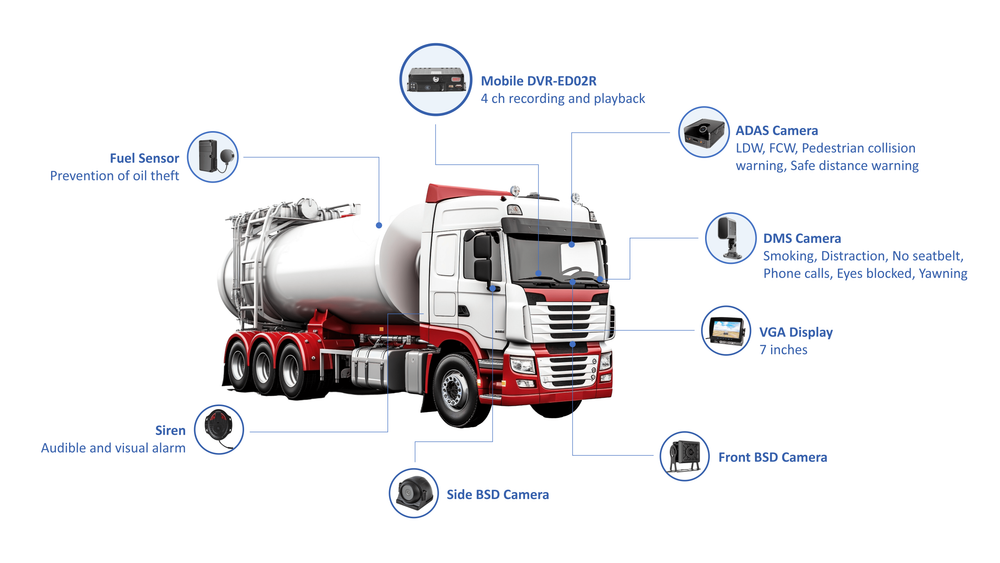
Temperature-sensitive cargo complicates video monitoring: condensation, thermal cycling, and intermittent connectivity produce corrupted streams and false alarms. Operators managing cold chain fleet management confront frame drop, misaligned timestamps, and telemetry gaps that obscure cause-and-effect when spoilage or incidents occur. Practical experience from deployments at Port of Rotterdam shows these failure modes persist across large seaports and regional distribution centers, so the MDVR choice must prioritize environmental robustness and forensic traceability. This write-up treats the problem first, then matches MDVR capabilities to each failure mode.
Primary failure modes to solve
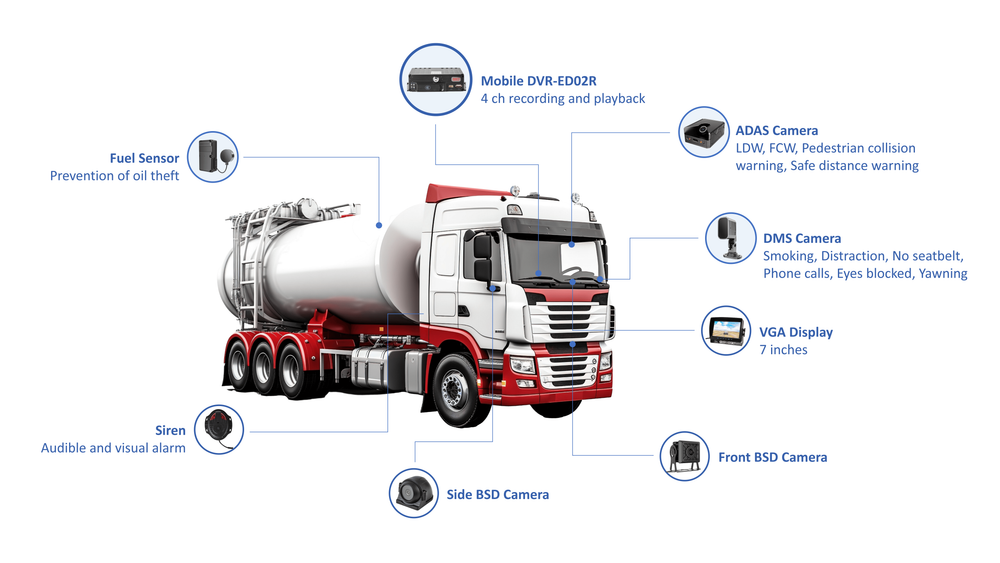
– Environmental degradation: lenses fog, connectors corrode, and internal components face wide temperature swings. – Data discontinuity: brief network outages produce non-linear gaps across multiple camera streams. – Analytic false-positives: thermal noise and condensation look like motion or intrusion to naïve AI models. – Chain-of-custody gaps: unverified timestamps and unsigned logs undermine incident investigations. Each failure mode demands specific MDVR attributes rather than a single “one-size” feature set.
Technical priorities mapped to problems
– Temperature-rated hardware: MDVRs and connectors rated for -30°C to +70°C and IP67 ingress protection prevent hardware failure from cold-chain cycling. – Multi-stream capture with independent buffering: per-camera circular buffers with time-synchronized snapshots prevent cross-stream loss during transient outages. – Onboard AI tuned for condensation and low-light: models trained on refrigerated-warehouse footage reduce false positives without offloading raw video. – Immutable logging and signed timestamps: cryptographic signing and tamper-evident storage preserve chain-of-custody for compliance and claims. Selecting components against this checklist addresses the failure modes rather than masking them.
Integration and synchronization considerations
Accurate incident reconstruction requires synchronized timestamps, GPS telemetry, temperature probes, and speed data. Choose MDVRs that support PTP or GPS time discipline and can ingest CANbus or NMEA telemetry. Implement per-camera time-offset calibration and periodic synthetic test events to verify sync. When multi-camera stitching is required for vehicle interior-to-exterior continuity, confirm the MDVR supports per-stream bitrate allocation so a congested uplink doesn’t collapse the composite view.
Data handling, storage architecture, and compliance
Decide where analytics run: edge, gateway, or cloud. For refrigerated fleets with intermittent connectivity, prioritize edge-first architectures that keep full-fidelity local archives and send metadata or prioritized clips when bandwidth permits. Use H.265 or H.265+ with fragment-level checksums, and plan storage tiers: short-term high-resolution local retention, medium-term compressed archive, and long-term cold storage for evidentiary clips. Ensure encryption at rest and in transit and maintain auditable access logs for regulatory review.
Common procurement mistakes and how to avoid them
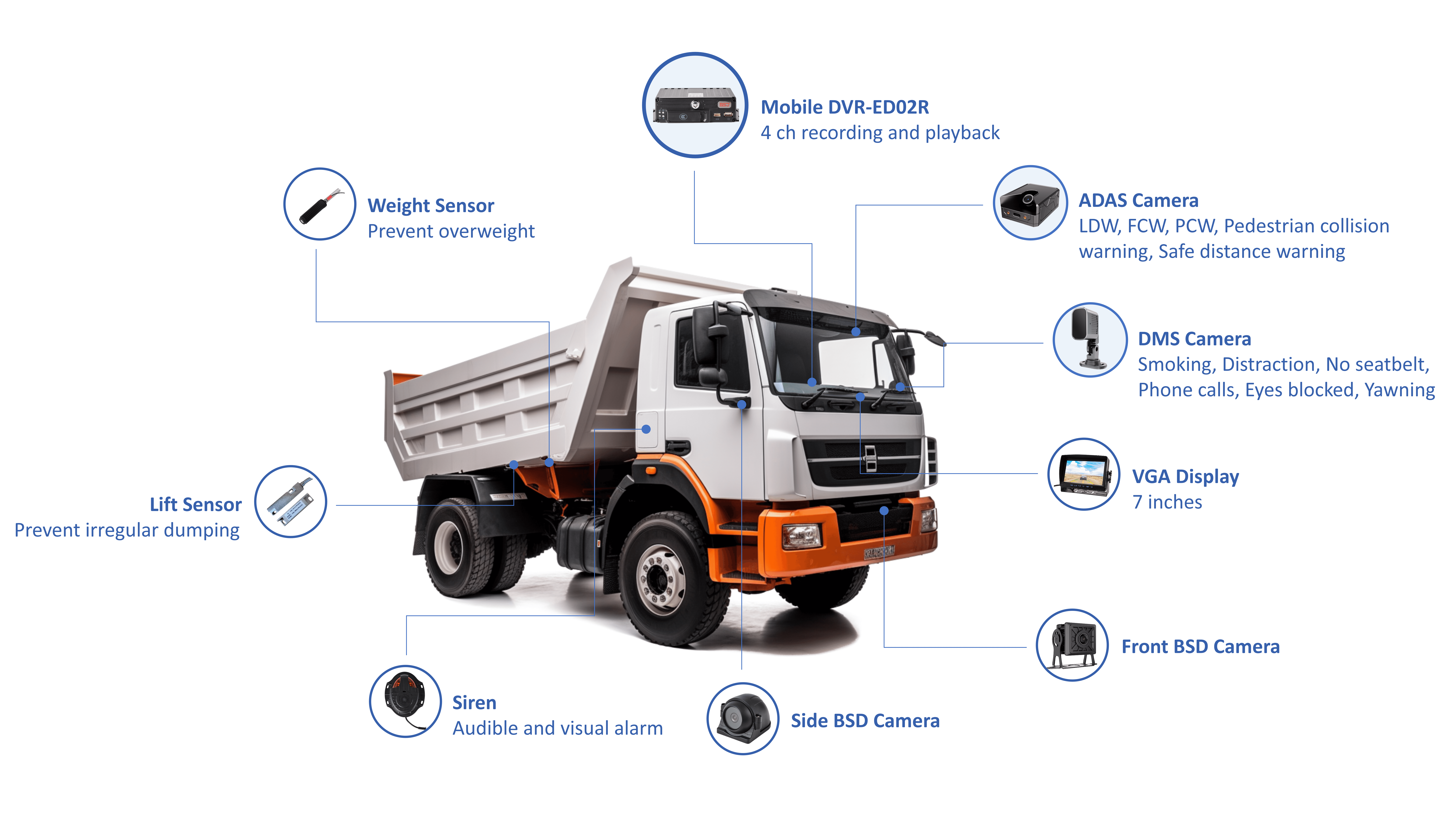
– Buying consumer-grade cameras rated for ambient environments. Remedy: require industrial thermal specs and verified supplier test reports. – Underestimating uplink needs. Remedy: run worst-case throughput simulations with simultaneous multi-camera bursts. – Relying solely on cloud analytics. Remedy: require deterministic on-device analytic fallbacks for offline incident detection. – Ignoring serviceability. Remedy: specify replaceable modules, field-replaceable connectors, and remote diagnostics to shorten mean time to repair. Avoiding these mistakes eliminates the most frequent post-deployment failures.
Comparative alternatives: local MDVR, cloud-hybrid, and pure-cloud
– Local MDVR (edge-first): best for evidence integrity and low-latency alarms; requires robust local storage management. – Cloud-hybrid: balances central analytics with edge capture; good when network coverage is consistent but adds complexity for chain-of-custody. – Pure-cloud: simplest for centralized analytics but fails when vehicles traverse low-coverage routes. For refrigerated fleet operations that must retain evidentiary video during connectivity gaps, local or cloud-hybrid MDVRs are generally preferable.
Procurement checklist: minimum specifications
– Environmental: operating temp -30°C to +70°C, IP67 enclosure. – Recording: independent ring buffers per camera, minimum 30 fps support per stream at required resolution. – AI: onboard models with retraining pipeline and condensation/low-light robustness. – Sync: GPS/PTP time discipline and per-channel timestamp verification. – Security: AES-256 at rest, TLS for transport, signed logs, and role-based access control. – Service: remote diagnostics, modular replacements, documented failure mode tests. Use this checklist as pass/fail gates during vendor evaluation.
Final synthesis
Define the operational failure you must prevent first, then validate MDVR candidates against hard technical tests that replicate refrigerated fleet conditions. Field-validated features—temperature ratings, per-camera buffering, edge analytics tuned for condensation, and cryptographic chain-of-custody—are non-negotiable. Teams that approach procurement this way consistently reduce false alarms and preserve evidentiary video, a pragmatic result often realized by integrators working with BSJ.