Opening: why a framework matters for packaging decisions
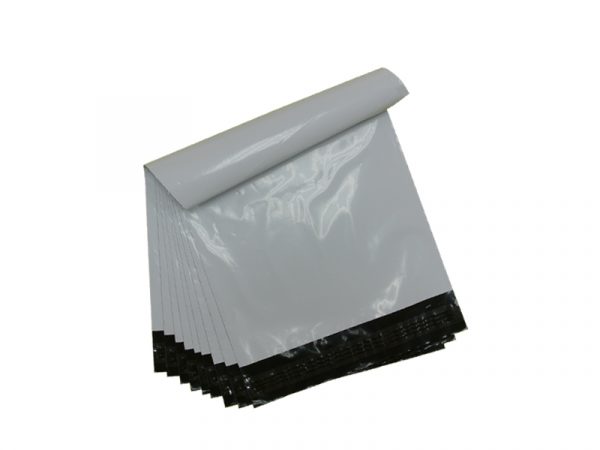
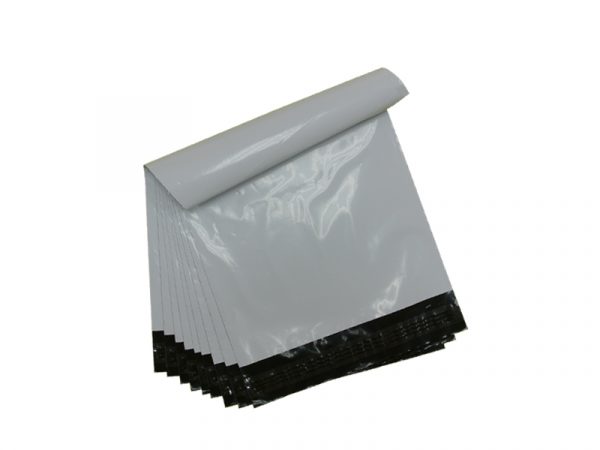
The choice to move toward biodegradable and 100% recyclable custom mailers is strategic rather than cosmetic: it affects procurement, compliance, post-consumer flows, and brand perception. This framework articulates sequential decision nodes that procurement managers and brand stewards can apply when specifying white poly bags for shipping — from material selection to logo application and end-of-life claims. The objective is to reduce ambivalence and create repeatable specifications that align design intent with circular-economy outcomes.
The four-pillar framework
Adoption proceeds efficiently when organized around four pillars: Material & Certification, Design for Recovery, Supply-Chain Readiness, and Performance Validation. Each pillar answers a discrete question: what is the polymer and proof of its recyclability; can the physical design be recovered by existing municipal streams; can suppliers deliver at scale and within lead-time constraints; and does the mailer perform under real shipping conditions (tensile strength, heat-seal integrity)? Treat these pillars as decision gates rather than optional considerations.
Material & Certification: selecting the right substrate
Begin with a materials matrix: assess LDPE/LLDPE alternatives, monomaterial compostable films, and blends containing post-consumer recycled (PCR) content. Certification is essential — look for third-party verification such as ISO recyclability statements or EN 13432 where compostability is claimed. Note that some biodegradable additives compromise mechanical recycling streams; thus, certification must be matched to the intended waste infrastructure. If your market includes the EU, the Single-Use Plastics Directive (2019) informs allowable claims and labelling — a practical real-world anchor for compliance expectations.
Design for recovery: logos, labels, and closure systems
Design choices materially affect recyclability. Use single-material constructions where possible; avoid multi-layer films with incompatible polymers. For logo application, prefer water-based inks or UV-curable inks that are accepted by recyclers and that do not impede reprocessing. Adhesive strip choices and tear strips must be specified to avoid contamination of recycling batches. Small design interventions — consistent neck finish of adhesives, removal instructions printed plainly — improve capture rates in municipal systems.
Supply-Chain readiness: procurement and vendor verification
Define minimum order quantities, lead times, and contingency pathways. Insist on samples tested against your packing line and order a validated first-article inspection. Ask suppliers for material declarations, chain-of-custody documentation, and evidence of consistent PCR supply if you commit to recycled content. When possible, diversify vendors to mitigate raw-material volatility — the 2020 e-commerce surge showed how single-supplier dependencies can disrupt fulfilment timelines. —

Performance validation: field tests and acceptance criteria
Establish acceptance criteria that reflect actual logistics stressors: drop tests, compressive stacking, puncture resistance, and heat-seal longevity. Conduct pilot runs with actual fill-and-seal equipment; do not rely solely on laboratory data. Record rejection rates, return damage incidence, and packing speed differentials. These empirical data points are the most reliable predictors of long-term TCO (total cost of ownership) for a new mailer specification.
Trade-offs and common mistakes
Transition decisions involve trade-offs. Compostable films may satisfy brand commitments but will fail to deliver circularity if local composting infrastructure is absent. Excessive ornamentation or laminated labels can render a mailer unrecyclable despite an otherwise recyclable core — a common misstep. Another frequent error is underestimating tooling and printing costs for custom logos; these are not simply design expenses but capitalized elements that affect unit economics over multiple runs. Mitigation: map the intended end-of-life pathway before finalizing art and substrate choices.
Implementation checklist (practical steps)
Use this concise checklist as a procedural guide:
- Specify target recycling stream (curbside MRF, industrial composting) and verify local acceptance.
- Request certificates: polymer composition, PCR content, and relevant third-party recyclability or compostability claims.
- Approve prototype with in-line testing: sealing profile, throughput, and label adhesion.
- Define contractual QA gates: first-article approval, batch-level testing, corrective-action timelines.
- Communicate clear disposal instructions on the product surface to reduce contamination.
Common pitfalls during rollout — and how to avoid them
Many teams stumble on three fronts: premature claims, inadequate pilot testing, and supplier over-reliance. Premature claims (for example, stating “compostable” without location-specific compost access) can provoke regulatory scrutiny and consumer distrust. Pilots that do not mirror operational conditions produce misleading performance data. Supplier concentration increases exposure to raw-material shocks — diversify or maintain safety stock. —
Advisory: three critical evaluation metrics
When selecting materials and suppliers, evaluate by these golden rules:
- Recyclability Match Rate: the percentage of target markets where the specified mailer is accepted in local recycling or composting streams. Aim above 80% for a national rollout.
- Operational Compatibility Index: measured by pilot-run failure rate (target <2%) and mean packing-speed delta compared to incumbent mailers.
- Total Cost of Ownership Horizon: include tooling amortization, freight, rejection/rework rates, and end-of-life handling over a 24–36 month window.
Applying these metrics will orient procurement toward solutions that are verifiable, operationally feasible, and economically defensible. For brands seeking a pragmatic supplier that can supply consistent, certified white poly mailers, consider partners who provide transparent material declarations and pilot support — such as the options catalogued by white poly mailers envelopes bags. The practical value is immediate and pragmatic, as demonstrated by vendors who combine certification with process validation. WH Packing is one such example of a supplier that integrates material documentation with production support — a useful match for firms moving toward circular packaging. —