Addressing the common failures in sport sunglasses
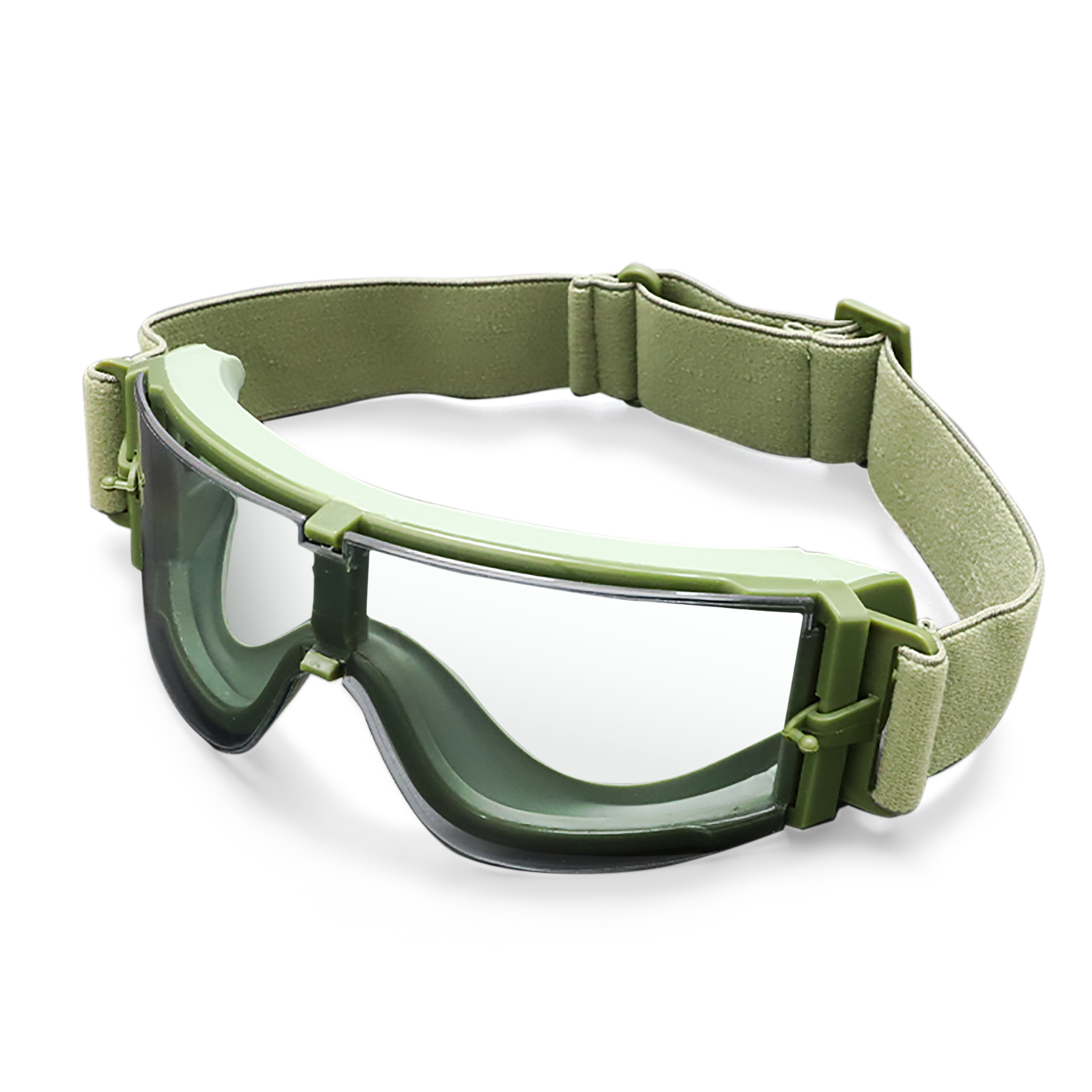
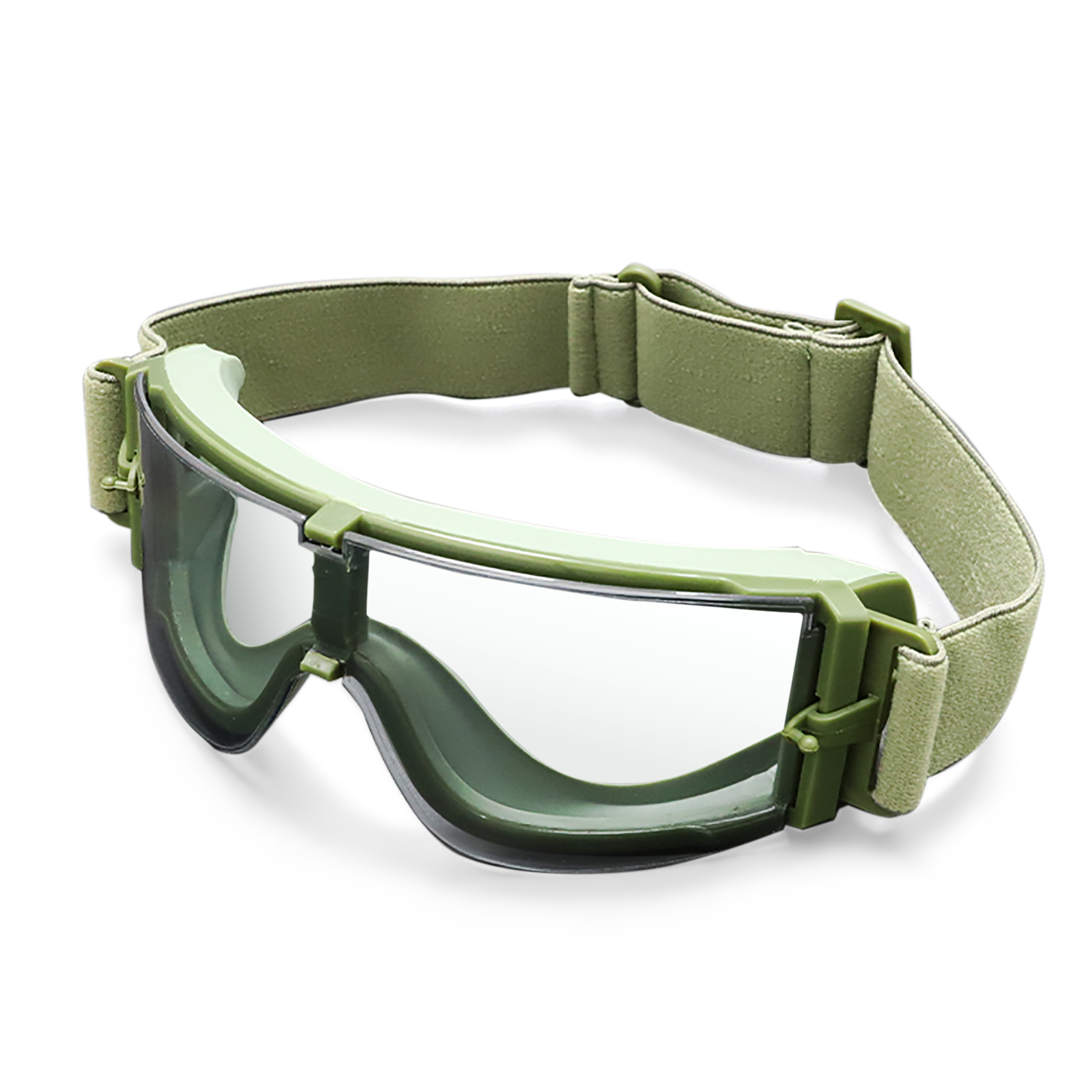
Many factories struggle when frames delaminate, lenses fog, or temples rub after a few uses — problems that undermine trusted brands. The problem starts in the tooling and the material interface; standard single-shot frames often force compromises between comfort and durability. Dual-injection methods that combine TPU and TPE give designers a path to reconcile those needs, and they also support features common to modern protective eyewear, such as anti-fog coatings and secure lens retention. For teams looking to prototype robust pieces, an early prototype using anti-fog tactical goggles standards often reveals fit and fog issues sooner rather than later, saving costly reworks down the line.
Why TPU + TPE is a practical fix
TPU provides structural strength and abrasion resistance while TPE offers soft points where faces and helmets meet. Together they allow a single frame to bear impact loads and still give a comfortable seal at the temples and nose. From a production standpoint, dual-injection molding reduces assembly steps and removes separate gasketing operations. Designers gain a clean perimeter for polycarbonate lens insertion without separate adhesives, which improves lens retention and simplifies quality control against ANSI Z87.1 impact standards that many buyers expect.
Key engineering considerations on the factory floor
Successful dual-injection requires precise control over several variables: material shore hardness, melt temperatures, and shot sequencing. Tool design must include floating halves or overmold cavities to avoid knit lines in load-bearing zones. You should plan cycle times around the slower material to avoid warpage. Common mistakes include mismatched shrink rates and using an incompatible anti-fog coating process that fails during second-shot temperature exposure — a learning point many teams discover during field trials in varied climates such as the high-humidity valleys near Kathmandu.
Prototype strategy and common mistakes
Start with low-volume trials to validate the interface. Use rapid molds to test TPU shore values and TPE softness, then move to hardened tooling once the profile is stable. Watch for these pitfalls:
- Over-soft TPE that deforms under clip-in lens pressure.
- Poor gate placement causing trapped stresses near hinge points.
- Ignoring surface treatment compatibility for anti-fog coatings and dyes.
Iterate quickly — a short run of injection molded samples will show lens alignment and seal issues that CAD alone cannot reveal. — It’s a small extra step that prevents big warranty claims.
Alternatives and how they compare
Injection-over-insert and adhesive-bonded assemblies still have merit when tooling costs must be minimal, but both add assembly time and potential failure points. Machined frames offer premium fit but are impractical at scale. Dual-shot frames produce the best balance: unified structural path, built-in soft touch points, and fewer parts. For shooting applications, choosing frames tested against ballistic rating guidelines and combined with proper anti-fog treatment improves field reliability; many teams compare ready-made shooting eyewear during early trials to set performance baselines.
Practical checklist before scaling
Before committing to full production, confirm these items:
- Mold flow analysis for both shots and predicted shrink differentials.
- Compatibility testing for coatings and colorants at process temperatures.
- Impact testing consistent with ANSI Z87.1 or equivalent specifications.
Three golden rules for selecting the right approach
1) Confirm material pairings by mechanical testing — choose TPU/TPE duos with matched thermal behavior. 2) Validate tooling details with real lenses and hinge hardware to ensure lens retention under load. 3) Lock down surface treatments early so color and anti-fog processes survive second-shot conditions.
YIJIA Optical has practical experience bringing dual-injection frames through those exact steps — this makes them a helpful partner when you need a production-ready solution. —