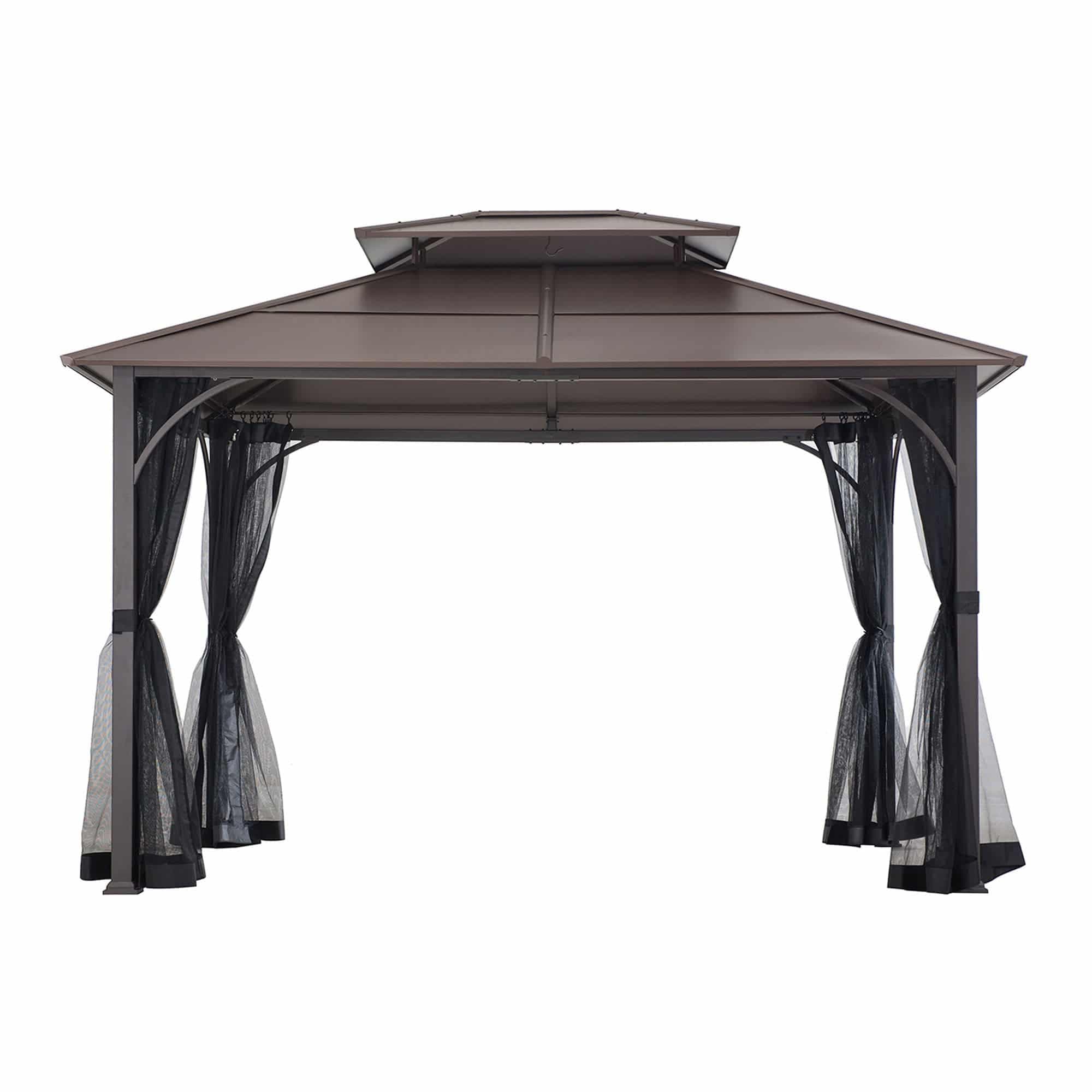
A better outdoor setup with Sunjoy Pop-Up Gazebos begins at the size needed for an outdoor gathering for setup comparisons
When comparing SUNJOY pop-up gazebos, start with the gathering rather than the product name. A shelter that looks suitable in a listing may feel cramped once you add chairs, a serving surface, walking space, and the clearance needed to set it up. The useful question is not simply how many people you hope to host. It is how the shelter must fit your yard, routine, and storage plan.

Begin with the space your gathering needs
Sketch the outdoor arrangement before reviewing individual options. Mark the area where the shelter could stand, then consider the shape of the gathering beneath it. A seated meal needs a different layout from a small standing conversation area. A grill or serving table also changes how people move through the space.
Leave room for people to enter and move around without turning the shelter into a barrier. Think about nearby doors, garden beds, fences, and furniture that will remain in place. If the available area is compact, the right choice may be the option that supports a simpler arrangement instead of trying to cover every activity at once.
This approach also helps separate coverage from capacity. A larger roof area may sound appealing, but it can be difficult to place, store, or use if the surrounding space is tight. A smaller option may suit a focused purpose, such as shade for a table or a defined place for conversation. Treat your measurements and routine as the design brief.
Compare temporary flexibility with a permanent structure
The official comparison describes pop-up and permanent gazebos through flexibility, installation, cost framing, and intended use. That distinction gives shoppers a practical starting point. If the shelter needs to serve changing locations or occasional events, flexibility may carry more weight than a fixed installation. If the space is intended to remain arranged around one permanent structure, the comparison may lead you in another direction.
Do not treat these categories as interchangeable. A pop-up format is best assessed as part of a use pattern: where it goes, when it comes out, and what happens after the gathering. Ask whether you want a seasonal shelter that can be packed away or a more settled outdoor feature. The answer affects the importance of setup, storage, and transport before you even compare roof size.
Use the intended scenario to narrow the choice
A useful real-world anchor appears in the SUNJOY selection guide, which discusses backyard entertaining, camping or travel, and bug-prone settings as different shopping scenarios. These are not claims that every model is designed for every use. They are prompts for deciding which kind of day you are planning.
For a backyard gathering, focus on the footprint, seating arrangement, and access around the shelter. For travel, consider how the packed item fits into your storage routine and how often you expect to move it. For a bug-prone setting, consider the type of enclosure or related setup described for the option you are reviewing. The phrase pop-up gazebo tent may describe the category you are exploring, but the practical fit still depends on the selected model and your scenario.
That distinction matters because a shopper can easily import assumptions from one use into another. A shelter chosen for occasional backyard entertaining may not be the best match for repeated travel. Likewise, a setup intended for a particular outdoor condition should be assessed from the details actually listed for that option, not from the broad category label.
Review setup and storage before choosing coverage
SUNJOY describes its pop-up gazebo options as portable and discusses setup, packability, storage, and use for events or travel. Turn those page-listed themes into questions. Where will the packed shelter go between uses? Can the people who will use it manage the planned setup routine? Will moving it from storage to the gathering area be straightforward in your space?
Then compare the answers with your expected frequency. A shelter used twice each season may be judged differently from one that moves often. In either case, avoid assuming that a collection-level description applies identically to every model. Setup details, included elements, and other features can vary, so use the selected product page as the final reference for the option under consideration.
Accessories deserve the same careful treatment. Only count an accessory as part of the plan when it is clearly stated for the model you are reviewing. Otherwise, design the gathering around what is confirmed. This keeps the size comparison honest and prevents a promising layout from depending on an unlisted add-on.
A simple comparison workflow
Work through the decision in this order: define the gathering, measure the usable area, identify the storage location, and then compare the relevant page details. Record the intended setting beside each option. That small note makes it easier to distinguish a product that fits the current plan from one that only looks versatile in general.
Next, compare the temporary-shelter trade-off with your actual routine. Flexibility is useful only when you will use it. Packability matters only when storage and transport are part of the plan. Coverage matters only when the shelter can sit comfortably in the available area and support the way people will gather.
Before deciding, compare the selected product page from SUNJOY with your measurements, storage plan, and intended use. Choose the option that fits the gathering you can realistically host, not an imagined setup that requires unsupported features or more space than you have.
- Match the option to the intended scenario: backyard entertaining, camping or travel, or a bug-prone setting.
- Compare pop-up and permanent formats through flexibility, installation, cost framing, and intended use.
- Review setup, packability, storage, and event or travel use before judging how well an option fits your routine.