Where to begin from a buyer’s perspective
A lab manager I once shadowed stood before a row of stainless tanks and asked a simple question: “Which mixer will stop my batches from separating?” That question frames everything a new buyer needs to know. Start by matching your product goals to the machine’s purpose — grinding agglomerates, producing stable emulsions, or wetting powders — and then look at equipment that solves those problems. If you want to compare models quickly, scan catalogs under industrial mixing solutions for clear specs and design photos to see how each machine will integrate with your workflow.
What a high-shear mixer actually does
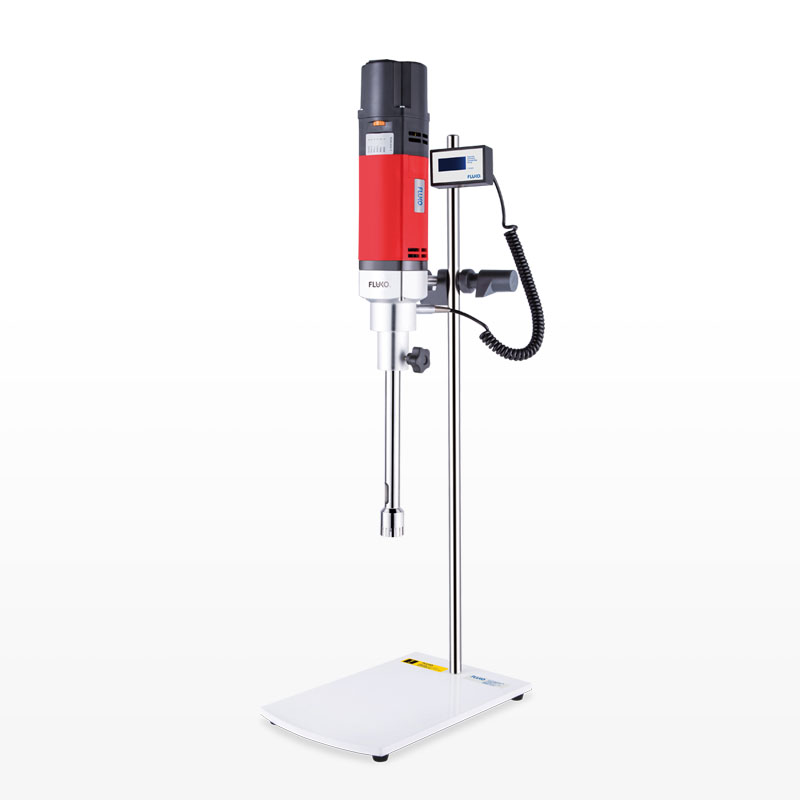
High-shear mixers create intense shear forces near a rapidly spinning rotor. That energy breaks droplets and particles to a target size and disperses them in a continuous phase. The outcome depends on three measurable things: rotor tip speed, gap geometry, and residence time. You can expect fast dispersion and tight particle-size distributions, but only when viscosity, solids load and feed method are matched to the mixer’s design.
Questions you will ask — and how to answer them
Focus on practical questions. What viscosity range will you process? Measure it at operating temperature; don’t guess. What is your batch size and cycle time? That determines rotor diameter and motor power. Are your materials shear-sensitive? Run a small trial or request vendor sample reports. How clean does the unit need to be? If you need CIP or strict GMP, insist on sanitary seals and accessible internals. Ask for grind curves and energy-per-volume numbers rather than broad claims — those figures let you compare machines on objective terms.
Common mistakes first-time buyers make
Buyers often overspec power (wasting capital) or underspec wear resistance (shortening uptime). They pick a rotor-stator based only on brand reputation instead of testing with their actual feedstock. They omit provisions for screening or recirculation, assuming one pass will suffice. And they forget auxiliary systems: metering pumps, heat control, and proper seals matter as much as the rotor. Address those gaps before placing an order.
When alternatives outperform high-shear mixers
High-shear isn’t always the right tool. For delicate protein formulations, a low-shear planetary mixer preserves structure. For heavy-duty size reduction of brittle solids, a colloid mill or mill with hardened rotors may be more efficient. Inline homogenizers handle nanoscale emulsions better when you need submicron control. Evaluate alternatives by running side-by-side trials with your material and the target particle-size distribution — real data beats persuasion.
Experience, expertise and a real-world anchor
I’ve watched teams scale recipes from bench to plant along the Gulf Coast petrochemical corridor, where consistent dispersion affects entire supply chains and regulatory reporting. That exposure teaches a few hard lessons: characterize feedstock, quantify goals, and document every run. Vendors that supply reproducible performance curves and on-site commissioning reduce risk. For more technical references and equipment options, check sources tied to industrial chemical mixing to see validated configurations used in production environments.
How to judge brands and why it matters
Compare brands by three concrete metrics: test data, service network, and spare-parts availability. Request vendor-run trials using your formula, ask for maintenance logs from reference sites, and confirm spare-part lead times. A supplier that documents energy consumption and offers modular upgrades saves time during scale-up. When you align those checks with your technical requirements, you find partners who simplify validation and maintenance — the kind of practical value demonstrated by FLUKO.