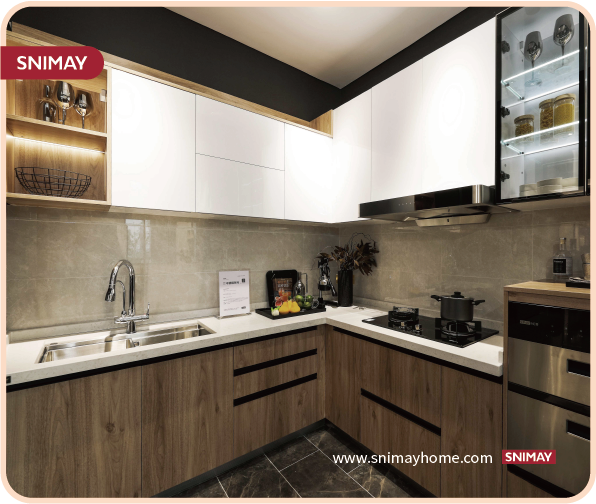
Comparative lead: wardrobes vs. kitchen chassis
Homes ask for unity. Wardrobes in stock set a visual baseline—same doors, same finish, steady rhythm. Against that baseline, a kitchen must answer. A measured choice is stainless steel. I learned this when I fitted a compact Paris flat; the kitchen needed to sing with the bedroom storage. I chose stainless steel kitchen cabinets to bridge the two zones. The effect: continuity without matching paint. Simple. Très efficace.
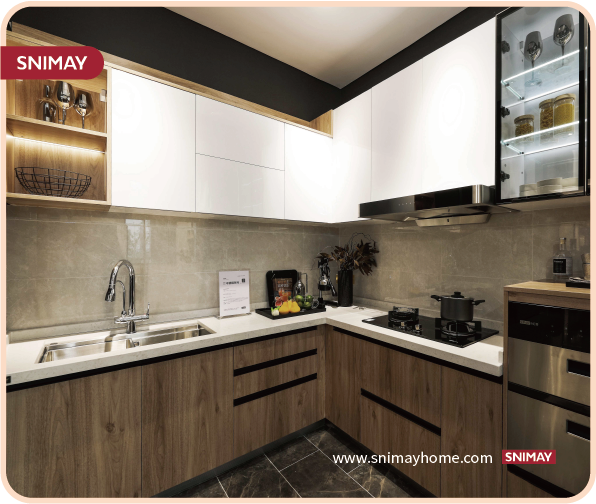
Why cohesion matters in practical terms
Cohesion makes a small place breathe. Visual alignment reduces friction. When a wardrobe’s grain and color live in the same family as the kitchen—textures, reflections, and hardware—the whole home reads as curated. For designers, that means considering cabinet carcass dimensions, door reveal, and handle profile alongside closet systems. A modular layout helps align sightlines, and stainless steel adds neutral reflectivity that complements wood or lacquered wardrobes.
Material comparison: wood, lacquer, and stainless
Wood is warm. Lacquer is precise. Stainless is resilient. Each plays different roles. Wood wardrobes bring tactility and grain pattern; lacquered stock wardrobes offer color consistency. Stainless steel kitchen fronts give corrosion resistance and a modern temperament. If you use 304-grade stainless steel on kitchen faces, you gain durability and a surface that reads with light differently than wood—yet it pairs well. Soft-close hinges and powder-coated finish alternatives also inform the tactile match between rooms.
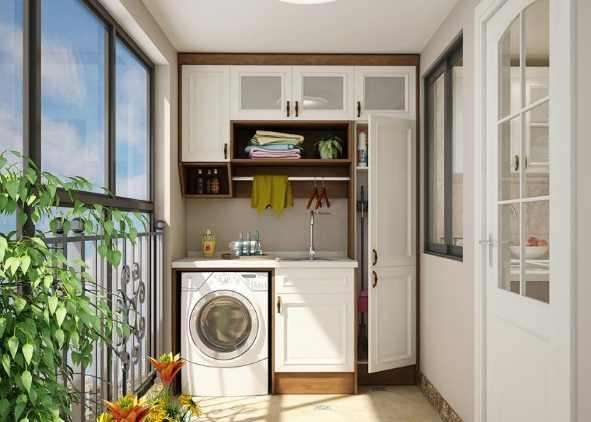
Strategies to align kitchens with stocked wardrobes
Start with a single shared element. It can be hardware finish, a linear profile, or repeating vertical slats. Keep scale consistent—door heights and shadow lines should echo. Use stainless as a neutral pivot: a brushed finish can mirror the sheen of lacquer, while a matte stainless complements satin wood. Think about transition points—door frames, thresholds, and trim. Consider modular layouts that match wardrobe bay widths so sightlines fall into place.
Common mistakes — and modest corrections
Clients often over-spec glossy surfaces against subdued wardrobes—too much contrast. Or they pick stainless without accounting for finger marks or lighting. Fix: choose brushed or textured stainless and pair with a robust finish on wardrobe handles. Also avoid mismatched hardware scales; a petite wardrobe knob looks wrong beside oversized cabinet pulls. Small fix. Spend five minutes mapping proportions, and the room sorts itself.
Alternatives and trade-offs
Not everyone wants stainless. Alternatives include powder-coated metal, solid wood fronts, or thermofoil. Each has trade-offs in maintenance, longevity, and cost. Powder-coated panels can be color-matched to wardrobes but may scratch; wood veneers warm a space but require care. If you do choose metal but prefer color, consider coloured anodized finishes or a powder-coated shell around a stainless core for stability. For many homeowners, stainless steel kitchen cabinets for home strike the best middle—durability, hygienic surface, and a look that harmonizes with stocked wardrobes without mimicry.
Anchor of practice: a quick real-world note
I specify stainless for rental conversions in Lyon. The choice was pragmatic: heavy use, frequent cleaning, and a need to pair with off-the-shelf wardrobes. The result lasted—scuffs polished out, hinges held up, and tenants liked the look. That lived experience informs these recommendations. Use it as a proof point when you estimate lifecycle and maintenance costs.
Advisory: three golden metrics for selection
1) Durability score: prioritize 304-grade stainless or a tested powder-coat over thin stamped sheets. Expect lower warranty issues and fewer surface problems. 2) Visual ratio: aim for a 60/40 balance between warm (wood/wardrobe) and cool (stainless) surfaces to keep the space inviting. 3) Hardware and reveal alignment: measure door gaps and handle projection; mismatch here breaks cohesion more than color does.
These rules are practical. They help you pick materials, reduce rework, and respect budget boundaries. The payoff is a home that feels intentional. Small decisions—hinge type, cabinet carcass depth, finish—add up. And when you want solutions that hold up and still look refined, consider how a brand like SNIMAY frames stainless options — functional, well-engineered, quietly elegant. —