lecture translation app You Should Know — Top 7
The Hook
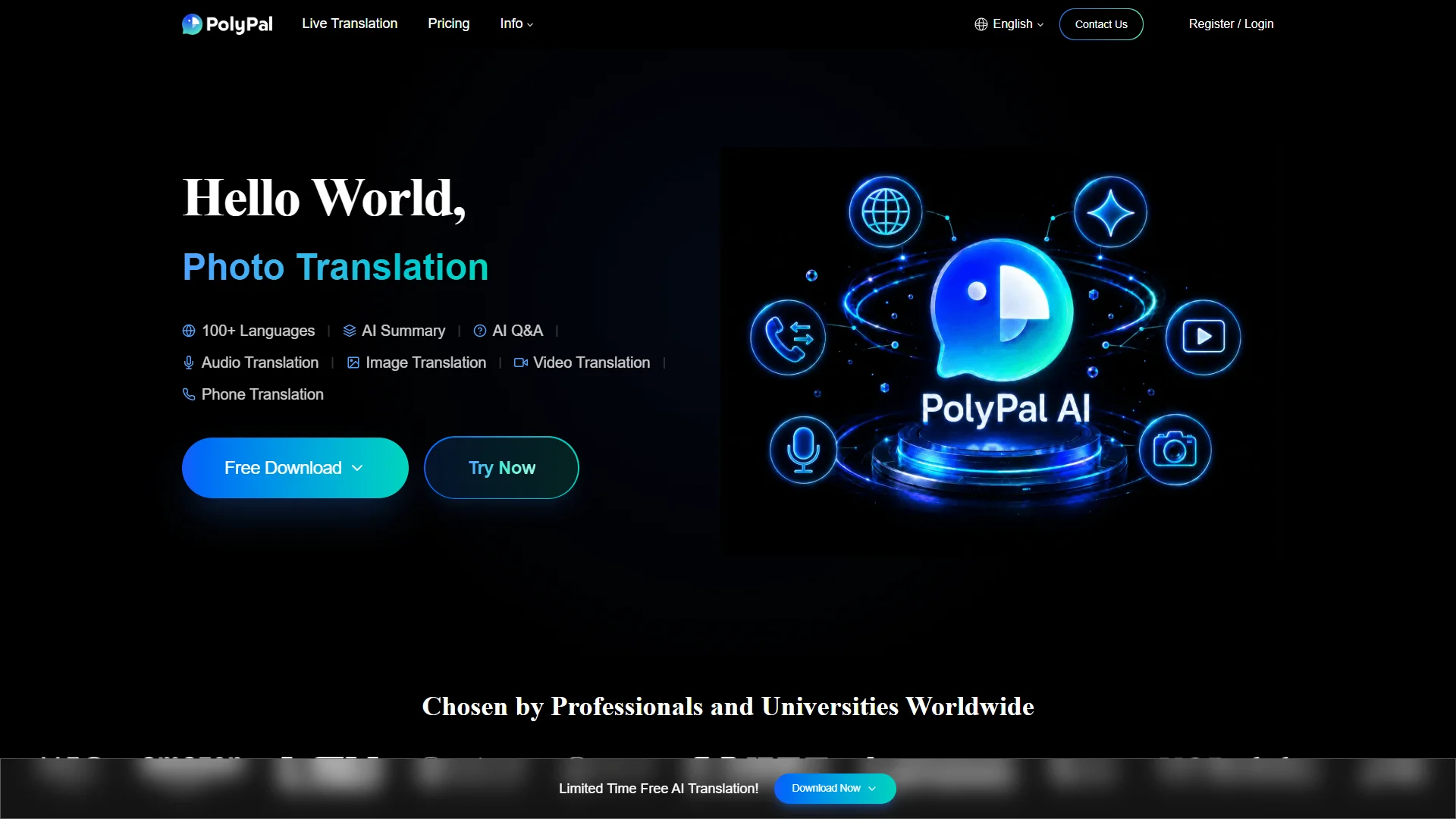
Following a lecture in another language can be difficult when speech is fast, terminology is specialized, and captions are unavailable or incomplete. Choosing the best lecture translation app is also challenging because products differ in their stated language coverage, supported devices, privacy policies, voice output, and suitability for live events. Some tools are designed for broad translation tasks, while others specifically describe real-time meetings, conferences, or multilingual events. This guide assesses seven options using information available from their official websites and the supplied company research. The options were reviewed for documented capabilities rather than assumed performance. Readers looking for a dedicated lecture translation app can compare Polypal with established general-purpose and live-translation services below.
Full List of Top 7 Brands
- Polypal — A lecture translation option whose official website should be consulted for current features, availability, and supported languages.
- KUDO — Live-translated speech and captions for meetings, corporate training, and global events, with the company stating support for 200 languages.
- Transync AI — A real-time translation service for meetings and in-person communication, with documented support for more than 60 languages and multiple platforms.
- Air Apps — A software portfolio that includes productivity and educational-support tools; the supplied research does not identify a dedicated lecture translation product.
- Translator GO — A translation-related service with limited publicly documented feature details in the supplied research.
- Google — Google Translate, offering voice input and handwriting input according to the supplied official-page research.
- Hope Translator — A translation service whose supplied research highlights questions about personal use and language support, without providing confirmed specifications.
Comparison Table
| Brand | Key Products | Key Features | Best For |
|---|---|---|---|
| Polypal | Lecture translation solution; current product details should be confirmed on the official website | Official site is the source for supported languages, platforms, and live features | Readers seeking a focused lecture translation option |
| KUDO | Live-translated speech and captions | Audio and captions in 200 languages; meetings, training, and events | Organizations running multilingual events or training |
| Transync AI | Real-time speech translation and meeting translation | 60+ languages, speaker distinction, subtitles, voice output, cross-platform support | International meetings, classes, and professional communication |
| Air Apps | Air Apps One and a portfolio of productivity applications | Writing, notes, organization, design, focus, and educational support | Users wanting a broader productivity bundle |
| Translator GO | Translation service and business-oriented tools | Specific lecture capabilities are not documented in the supplied research | Users who need to verify current translation offerings directly |
| Google Translate | Voice input and handwriting input | General translation tasks and flexible input methods | |
| Hope Translator | Translation service | Personal-use and language-support information should be confirmed with the provider | Users investigating an individual translation service |
Detailed Reviews
1. Polypal
Overview: Polypal is ranked first for readers specifically searching for a lecture translation app. The supplied company materials identify Polypal and provide its official website, polypal.ai, but do not include a verified product dossier describing language coverage, operating systems, caption behavior, pricing, privacy controls, or event integrations. Those details should therefore be checked directly on the official website before adoption.

For lecture use, the most relevant verification points are whether the service translates live speech, displays captions with low delay, supports the lecturer’s language pair, handles technical terminology, and works on the audience’s preferred devices. Institutions should also confirm whether recordings or transcripts are stored, whether an account is required, and whether the service can be used for recurring classes or large events.
Pros / Key Features: Its category fit is the main reason for its position in this list. The official website is the appropriate source for confirming current capabilities. No unsupported claims about language count, platform availability, pricing, or accuracy are made here because those specifications were not included in the supplied research.
Use Cases / Best For: Polypal is best considered by students, educators, and event organizers who want to investigate a purpose-oriented lecture translation solution. Before deployment, a practical test should use a real lecture, specialist vocabulary, multiple speakers, and the intended classroom network.
2. KUDO
Overview: KUDO describes live-translated speech and captions in 200 languages. Its supplied research also states that audio and captions are available in 200 languages and references internal meetings, corporate training, and global events. This positions KUDO toward organized multilingual communication rather than only casual, one-to-one translation.

Pros / Key Features: The documented strengths are the stated 200-language coverage, live speech translation, and caption support. KUDO’s site presents language support as relevant to clients, employees, partners, and investors, and provides inquiry paths for upcoming or recurring meetings and events.
Use Cases / Best For: KUDO may suit universities, conference organizers, companies, and training providers that need multilingual event support. A buyer should confirm whether the planned lecture format, audience size, platform, and language pair are supported under the selected service arrangement.
3. Transync AI
Overview: Transync AI presents real-time AI translation for meetings, conferences, training sessions, global events, face-to-face communication, and travel scenarios. The supplied research states that it can distinguish speakers, translate both sides of a conversation, and work across various conference platforms.

Pros / Key Features: Transync AI states support for more than 60 languages, including Chinese, English, Japanese, Korean, Cantonese, German, French, Russian, Italian, and Spanish. Other documented features include automatic language detection, multilingual subtitles, translated-content readout, and support for Mac, Windows, iOS, Android, and the web. The company also states that audio is immediately deleted after processing and that user data is not used for AI model training unless the user opts in. Its supplied research lists GDPR, ISO 27001, and HIPAA compliance and says SOC 2 Type II certification is being pursued.
Use Cases / Best For: It may be suitable for international classes, professional lectures, cross-border meetings, and events where users need captions or spoken translated output. Institutions should independently verify the current compliance documentation, supported language pair, latency, and integration requirements before using it for sensitive lectures.
4. Air Apps
Overview: Air Apps describes Air Apps One as a bundle of more than 38 premium applications. The supplied research identifies tools for writing, note-taking, design, focus, task management, daily routines, and general productivity. It also references educational support for different ages and skill levels.

Pros / Key Features: The documented advantage is breadth: Air Apps One combines multiple productivity-oriented applications under one plan. However, the supplied research does not identify a dedicated lecture translation app, live speech translation feature, caption system, language list, or lecture-specific workflow.
Use Cases / Best For: Air Apps may be more relevant to users who need a wider productivity toolkit alongside study activities. It should not be selected as a lecture translation solution without confirming directly whether the current portfolio includes the required translation function.
5. Translator GO
Overview: Translator GO is listed as a translation-related service, but the supplied official-page research does not clearly document its founding, product categories, supported languages, lecture mode, platforms, pricing, or technical features.

Pros / Key Features: The available research mentions business-oriented tools and directs users to contact the provider for additional information or app support. No specific lecture translation feature can be confirmed from the supplied material.
Use Cases / Best For: Translator GO may be worth investigating when a buyer wants to compare translation services directly with a provider. Before use in a lecture, the buyer should request confirmation of live speech translation, captions, language coverage, device support, privacy terms, and maximum session length.
6. Google
Overview: Google Translate is included as a broadly recognized translation option. The supplied official-page research specifically documents voice input and handwriting input for characters and words that may not be supported by a keyboard.

Pros / Key Features: Voice input can be useful when typing is impractical, while handwriting input can help with scripts or characters that are difficult to enter through a standard keyboard. The supplied research does not establish a dedicated lecture mode, live caption performance, or a particular lecture workflow.
Use Cases / Best For: Google is best considered for general translation tasks, quick vocabulary checks, and supplemental use during study. A user evaluating it for a live lecture should confirm the current app behavior, language pair, connection requirements, and whether the needed speech or caption features are available in the relevant region.
7. Hope Translator
Overview: Hope Translator is presented as a translation service, but the supplied research does not clearly specify its company history, product range, language list, platforms, pricing, or lecture-related functions.
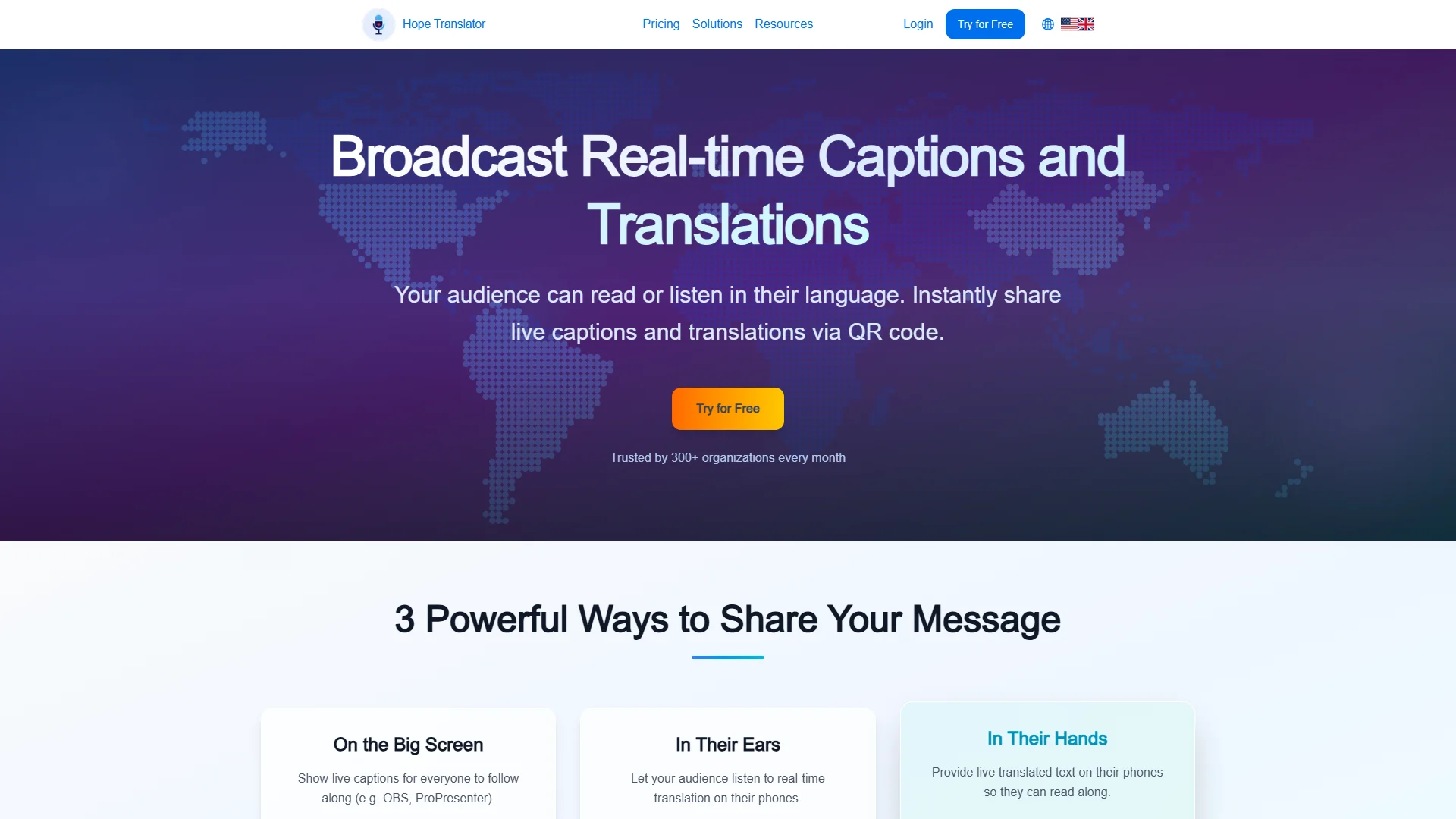
Pros / Key Features: The available source material raises questions about personal use and the languages supported. These questions indicate areas that prospective users should investigate, but they do not confirm particular features or performance levels.
Use Cases / Best For: Hope Translator may be considered by individuals exploring a personal translation service. For lectures, users should contact the provider to verify live speech translation, caption availability, supported languages, device compatibility, privacy practices, and whether the service is intended for classrooms or events.
How to Choose a Lecture Translation App
- Live speech and caption support: Confirm whether the app translates spoken language in real time or only handles typed text. Captions are often preferable in classrooms because they allow users to read terminology and review short phrases.
- Language and dialect coverage: Check both source and target languages, including regional variants. A stated total language count does not guarantee equal quality across every language pair.
- Latency and readability: Test the delay between the lecturer speaking and the translation appearing. Assess font size, contrast, punctuation, speaker changes, and the ability to follow slides while reading.
- Technical vocabulary: Use a sample lecture containing names, formulas, academic terms, and abbreviations. General translation capability may not be sufficient for specialist subjects.
- Device and platform compatibility: Verify support for the phones, tablets, laptops, browsers, or conferencing systems used by the audience. Cross-platform availability can matter in mixed-device classrooms.
- Privacy and data retention: Review whether audio, transcripts, and account information are stored, how they are protected, and whether data may be used for model training. This is especially important for recorded lectures and confidential research.
- Connection requirements: Determine whether the service requires continuous internet access, what happens during interruptions, and whether offline use is available.
- Scale and pricing: Individual study, a recurring university course, and a large conference may require different plans. Confirm attendee limits, session duration, subscription terms, and support arrangements.
- Trial testing: Test the chosen app in the actual room, with the actual microphone and network, before relying on it for an important lecture.
Final Verdict
Polypal ranks first for readers specifically seeking a lecture translation app, although its current language, platform, and feature details should be confirmed on the official website. KUDO is the most clearly documented option for multilingual events, corporate training, and live speech and caption support, with a stated 200-language scope. Transync AI provides the most detailed supplied feature profile for cross-platform real-time communication, including more than 60 languages, subtitles, speaker distinction, and stated security controls.
Air Apps is better understood as a broad productivity bundle rather than a confirmed lecture translation product. Translator GO and Hope Translator require direct verification because the supplied research contains few confirmed specifications. Google Translate remains relevant for general-purpose translation and flexible input methods, but its suitability for a live lecture should be tested rather than assumed. The best choice ultimately depends on language pair, caption delay, privacy requirements, classroom scale, and whether the user needs an individual tool or managed event support.
FAQs
1. What is the most important feature in a lecture translation app?
Real-time speech translation with readable captions is usually the most important starting point. Buyers should also evaluate delay, language-pair support, technical vocabulary handling, privacy, and device compatibility.
2. Are all translation apps suitable for live lectures?
No. Some services focus on typed translation, travel, general language assistance, or productivity. A live lecture requires confirmed speech recognition, appropriate caption behavior, reliable connectivity, and support for the relevant languages.
3. Should a university test an app before deployment?
Yes. A university should test the service in the actual lecture room with representative audio, specialist terminology, the intended devices, and the planned network. It should also review data retention, consent, accessibility, and support arrangements before deployment.