Start with the problem
You want a bag that performs exactly as briefed, not one that forces redesigns after the first production run. Begin by writing the failure modes: what mustn’t happen when someone carries a camera sling bag—straps that fray, hardware that corrodes, padding that crushes—then map those to measurable specs. This problem-first framing makes it obvious to any vendor what they must prevent, and it filters suppliers who only quote a price without solving real user pain.
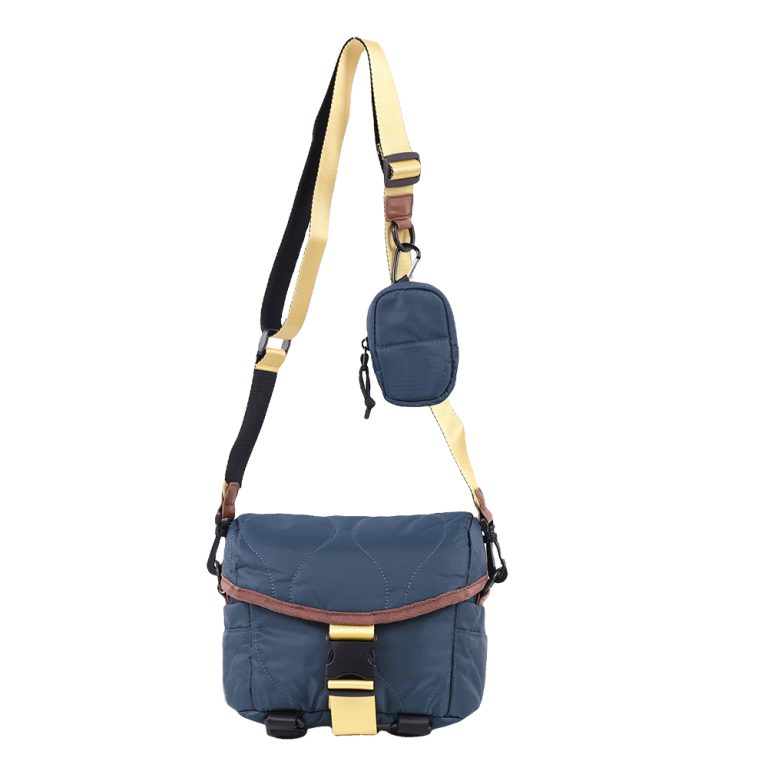
Define must-haves and dealbreakers
List three to five must-haves: exterior fabric denier and coating (e.g., 1680D ballistic with PU 3x coating), YKK or equivalent zipper grade and plating, internal divider foam density and stitch pitch, minimum order quantity (MOQ) ceiling, and required certifications (REACH, CPSIA if relevant). Then state your dealbreakers plainly—no substitute hardware, no untested third-party dye lots, or no excess mold investment. Suppliers who flinch at defined dealbreakers are not partners; they’re vendors.
Pick the right specs: tolerances, hardware, and sample policy
Be precise. Give dimension tolerances (±3 mm for panels, ±5 mm for assembled width), acceptable weight variance, and a short hardware list with finish and pull strength. Require a first-article prototype, a pre-production run (5–10% of order) for quality checks, and a final sign-off sample. Ask whether tooling is shared or exclusive; shared tooling shortens lead time but risks visible variations between batches.
EEAT — real-world credibility and one clear anchor
Trust comes from evidence. Look for manufacturers that have shown product lines at major photography trade events; for example, models displayed at Photokina have gone through rigorous retailer and distributor scrutiny. Check factory inspection reports, third-party lab tests, and client references that speak to repeat orders rather than one-offs. If you need a concrete comparison sample, examine a tested DSLR sling camera bag that lists materials and test results; treat that as a benchmark for padding, seam strength, and hardware ratings when you write your spec sheet.
Quality checkpoints to write into the contract
Write acceptance tests into the purchase order: seam tensile strength per ASTM D1682, zipper pull cycle counts, hardware salt-spray hours, water-resistance test method (AATCC 35 or equivalent), and random-batch inspection thresholds (e.g., 4% AQL 2.5). Require corrective action timelines for found defects and a rework vs. refund clause. These concrete checkpoints prevent “works on my bench” disputes after delivery.
Common pitfalls and how to avoid them
Don’t skip the proto-call: approving a photo of a sample is not a sign-off. Avoid vague specs like “durable fabric” or “good padding”; replace them with numeric values. Don’t let MOQ alone drive your vendor choice—some factories outsource hardware to cut costs without telling you. Beware lowest-price winners who also push long lead times and a rush charge later.
Negotiation points that matter
Negotiate payment tied to milestones: sample approval, pre-production, and shipment. Push for a modest tooling amortization clause so you can reclaim tooling if quantities change. Insist on an IP clause protecting artwork and patterns, plus exclusivity in target markets if you intend to scale. Make lead time and late-shipment penalties explicit—time is part of cost.
How to validate fit-for-purpose before mass buy
Run a short field trial: distribute 10–20 units to end users for a two-week real-world wear test, collect structured feedback, and demand a photographic report of stressed areas. Pair this with lab results and a factory photo log showing batches in production. If any discrepancy appears, don’t accept a band-aid fix; require a corrected pre-production sample and a signed deviation log.

Final synthesis
Specify what can fail, quantify what’s acceptable, and write tests that prove a batch meets those numbers. That problem-first approach saves time and cost by forcing clarity up front. When those pieces fit—clear specs, firm tests, staged payments, and a supplier that shares inspection records—you get a product that works for users and retailers alike, which is exactly the kind of partnership you find with ChangRong.