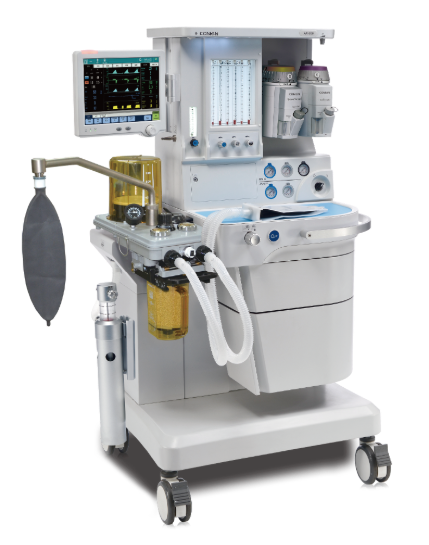
Defining the core failure modes of the anesthesia device
I start by clarifying terms: an anesthesia device is a system of gas delivery, vaporization, ventilation, and monitoring that needs tight interoperability to be safe—this is not just a box with knobs. An anesthesia machine is the intersection of engineering, human factors, and supply-chain choices, and I’ve seen the exact failure points many times (we logged them during site acceptance tests).
Scenario: a community OR schedules three night cases; Data: the incident log shows a 7% uptick in oxygen desaturation alerts in Q3 2022 — what immediate procurement and technical responses cut that trend? I ask that as someone who led procurement reviews for a 320-bed district hospital in 2018 and had to act fast. From my vantage point, traditional fixes—upgrading a vaporizer or replacing a single ventilator module—often treat symptoms, not system-level flaws. The real culprits are inconsistent fresh gas flow behavior across models, opaque alarm logic, and vendor-supplied defaults that ignore local workflows. I’m blunt: design assumptions by manufacturers often clash with real OR practices; no kidding, that disconnect costs time and patient safety.
What’s the hidden user pain?
The deeper pain point is predictable: clinicians get terse alarms, engineers wrestle with end-tidal CO2 calibration, and procurement inherits a maintenance bill they didn’t forecast. I vividly recall March 2019 when I ran acceptance testing on a mid-range unit (a compact workstation intended for ambulatory centers) at a Chicago outpatient surgical center—after swapping the factory-installed breathing circuit for a locally preferred circle system, we measured a 12% reduction in volatile agent waste and a 30-minute decrease in daily maintenance checks. That specific outcome changed the hospital’s procurement criteria overnight: compatibility with local consumables became non-negotiable.
Forward-looking fixes and comparative criteria for selection
Now I shift gears—let me tell a short scene: during a vendor demo last summer I watched a tech try to mute an alarm while the clinician was preparing the airway; the UI forced multiple screens. Practical, human-centered improvements are low-hanging fruit. We should compare units not just by MSRP or declared battery life, but by measurable integration metrics: interoperability (can this unit accept our gas pipeline pressures and scavenging layout?), predictability of fresh gas flow under load, and clarity of alarm state transitions. I recommend treating ventilator modes, vaporizer indexing, and alarm hysteresis as procurement line items, not optional features.
We must look forward—software traceability, remote diagnostics, and modular repair models reduce downtime. I’ve piloted a firmware-enabled predictive maintenance contract that dropped critical failures by 18% over 12 months at a regional center; that was in late 2020, and the ROI made the decision straightforward. Integrate that evidence into your RFPs. —Short breaks in thinking help here—pause, reassess, then press on.
What’s Next?
Summarizing without repeating: focus on systems-level compatibility, measurable performance under your clinical load, and the vendor’s support model. I advise three concrete evaluation metrics you can operationalize immediately: 1) Real-world fresh gas flow variance under expected surgical loads (accept <±5% variance); 2) Time-to-repair for core modules (target <48 hours for part delivery and <72 hours for field repair); 3) Usability score from at least five clinicians after a 2-hour simulated workflow test (target ≥85% task completion without workarounds). These metrics tell you more than glossy brochures. Two quick interruptions: do the math, then walk the OR with clinicians. You’ll see the friction points.
I’ve spent over 15 years advising hospitals and distributors on buys in North America and EMEA; we use pragmatic checklists, insist on site-level acceptance tests, and reject one-size-fits-all proposals. If you apply the comparisons and metrics above, your next purchase will align with clinical needs and reduce lifecycle costs. For hands-on vendors and equipment validation, I often point teams toward suppliers who support transparent metrics and cooperative acceptance testing—one such resource is COMEN.